We went out to a hill to view last night’s Independence Day fireworks after an afternoon at a family barbecue. Some years we go down to the beach for a closer view. This year the process of getting there, finding a parking space (usually very far away), walking all the way down (and all the way back up) with a small child, finding a viewing spot, and afterward spending over an hour to get out through clogged streets just wasn’t appealing.

So we went to a hill a mile or so away, joining a standing throng of people waiting for the local show to start. To the east and southeast we could see distant fireworks lighting up the horizon from San Pedro to Norwalk. Around the corner we could see a similar view of fireworks to the northeast, including Los Angeles proper.

It’s one thing to see one fireworks show at a time. It’s another to look out and see them all along the horizon. It’s unifying, appropriately enough.

We’d only been there a few minutes when the seaside display started. The next ridge of hills blocked the lower fireworks, but we could see most of them above the hill — without the deafening booms and smoke. The wind was blowing inland off the ocean, a smoke plume trailing sideways. As the finale hit, someone nearby set off their own unsanctioned display, to considerable applause.

After it was all over, we stayed for a few minutes, looking out at the more distant displays still going, then walked down the hill to the car and drove home.

The faint boom-boom-boom continued for hours, punctuated every 15-20 minutes by some closer pop! or shriek as someone set something off nearby. Sometime around midnight, it finally tapered off enough that I drifted off to sleep.

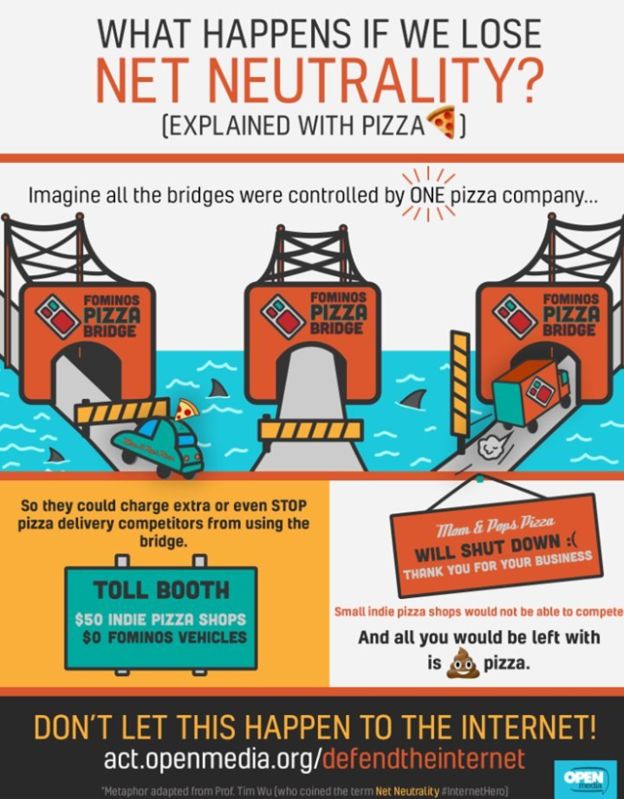
The FCC wants to abolish “net neutrality”, which states that ISPs should treat all traffic the same, and not block, throttle, or promote data based on what service you’re using or who you’re connecting to.

In short: Your cable company shouldn’t decide where you get your news, what businesses you buy from, which video chat services and streaming services you use, or who you talk to.

ISPs are people’s and businesses’ gateway to the internet. They shouldn’t also be gatekeepers. Net Neutrality protects free speech, communication, and economic activity that could otherwise be limited or adjusted to push a carrier’s own agenda at the expense of alternate views, create barriers to competition and innovation, and further entrench existing monopolies. The internet works best when it’s allowed to innovate at the edges, rather than locking us all into a near-monopoly’s choices.

This isn’t a hypothetical problem: ISPs have violated net neutrality in the past. ISPs have intercepted search queries and redirected them to their own portals. AT&T once forced Apple to block Skype on the iPhone. Verizon used to block tethering apps. Multiple carriers blocked Google Wallet in favor of their own payment services.

We fought this battle years ago. And now we have to fight it again. The FCC’s plan to roll back net neutrality doesn’t help subscribers, doesn’t help businesses, doesn’t help startups, doesn’t help publishers, doesn’t help you — doesn’t help anyone except the existing carriers and those they might decide to prop up.

I sent the third paragraph (minus the link) as a comment to the FCC through this Free Press Action Fund petition. Mozilla also has a petition, and is collecting voicemails to forward to the FCC before the May 18 meeting. So far they’re up to 50 hours’ worth of audio!

UPDATE! On July 12, 2017, the internet will come together again. Like the SOPA blackout in 2012, and the Internet Slowdown in 2014, everyone from tech companies to small websites to individuals will sound the alarm. Learn more and join the protest at the Battle for the Net.

I’ve been thinking a lot about Robert J. Sawyer’s Quantum Night the last few months. It links human cruelty, psychopathy, and mob behavior to the nature of consciousness, mostly focusing on the main characters but playing out against a global crisis brought on by a rising tide of xenophobia.

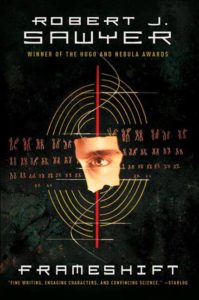
More recently, I’ve been thinking about Frameshift. His 1997 novel deals with (among other things) eugenics, Neanderthals, Nazis, and health insurance companies doing everything they can to avoid covering people with pre-existing conditions.

I can’t imagine why that keeps coming to mind….

I don’t remember much about Marineland of the Pacific. It was an ocean park/aquarium like Sea World that operated near Los Angeles for several decades, closing in 1987. I know I visited at least once, with my grandparents, but all I remember is:

  1. The view from what I assume was Palos Verdes Drive, as the car crested a low summit, brown hills rising to the right and falling gently toward the ocean on the left. The park stood on a promontory jutting out into the ocean. I haven’t been able to locate the spot, but that could just mean the road’s been moved.*
  2. A sign saying “CAFE” visible from the parking lot, which I misread as rhyming with “safe.” (Evidently I was very young at the time.)
  3. That’s about it.

You’d think I’d remember the sea life at least a little, though I suppose it’s possible I’ve misattributed some memories to Sea World (which, come to think of it, I don’t remember super-well either).

Not much of Marineland remains aside from a few names at Terranea Resort, which now occupies the site. But a piece of that history is coming back. In 2014, a 35-foot whale statue from the park entrance was found in a maintenance yard. The city has approved plans to place the statue at Point Vicente Park just up the road. Update April 2026: The statue still hasn’t been installed. I was out walking around Point Vicente over the weekend (the day after this year’s Whale of a Day and lighthouse tours, annoyingly enough) and got to wondering about it. The latest article I’ve found is from 2023, when they were still trying to arrange funding to restore the fiberglass statue, after a half-million estimate derailed the original plans.

Apparently the decline and closure of the park was rather sordid: HBJ, the textbook company that owned Sea World at the time, had tried to buy Marineland’s star orcas. They weren’t selling. So HBJ bought the park in December 1986. Late in January, they secretly loaded Orky and Corky onto trucks in the middle of the night and drove them down to San Diego. (Update: the moving process was traumatic for the whales as well.) A week later, they announced the park would close in March. They shut it down halfway through February, and by May they’d sold off the property to a real estate developer. Plans for a conference center were never realized, and the site was abandoned for 20 years until construction began on Terranea.

*Update: My dad pointed me to the Wikipedia article, which led me to a post at Modern Day Ruins, which led me to the California Coastal Records collection of aerial photographs. I found one from 1986 that indicates that Rancho Palos Verdes Drive is in the same spot as it was back then, but the housing developments on either side to the east of the turnoff weren’t there at the time. That’s probably why I didn’t recognize it. Or the road I remember could be the one down to the parking lot.

Anza-Borrego Wildflowers

The kiddo had a day off from school in mid-March, so I took a vacation day and we all drove out to the desert to see the spring wildflowers. After the endless suburbia of Los Angeles, northern Orange County, and Corona, we drove past hills green from the winter rains, then into the similarly-endless suburbs of Temecula. It’s been years since I took Highway 79 south, and the city has grown a lot, but after a few miles the strip malls and housing developments disappeared, the road shrank to two lanes, and we drove through green hills with oaks, bushes, and the occasional patches of poppies, mustard and lupins. Fences, dirt roads and gates indicated ranches and wineries. Continue reading

Remember to vote in local elections.

Initiatives, council and school board members, judges, etc. affect you and your community directly. It may not be as exciting as the Presidential race, but it determines who makes decisions in your town, who passes and enforces city laws and regulations, local taxes, which services are offered and how. If the national government wants to drop the ball, states and cities are going to have to step in, and local elections impact how it gets picked up — or doesn’t.

It impacts national politics too: the people elected locally go on to build the pool of state and national candidates. If you care about 2018 or 2020, get out and vote locally to get the ball rolling!

Voter turnout is always lower in off-years than in Presidential election years, and it’s even lower in local elections. That means your vote makes a bigger share of the result than it does when you vote in November – even in an off-year.

So get out there, register to vote if you haven’t, and help make decisions at the local level.

ยปAll pages site-wide with this tag