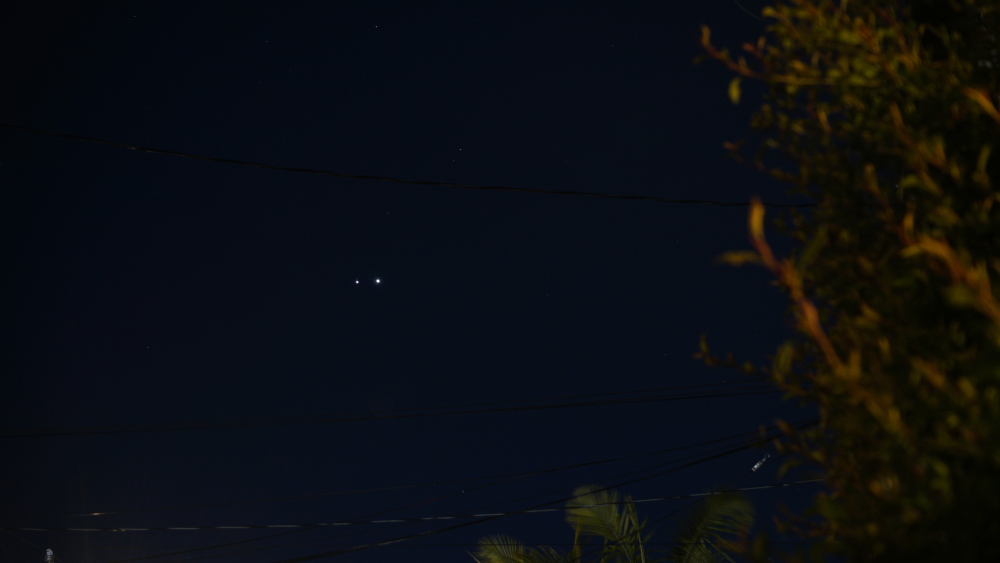
A photo of Venus and Jupiter close together in tonight's sky, and a close-up that appears to have very blurry images of Jupiter's moons.

Dark blue sky, blurry bushes off to the right. In the middle of the sky are two bright spots right next to each other, the right one noticeably brighter.

With rainstorms for the first half of the week, I figured the sky would be clouded over, and I completely forgot about the conjunction of Venus and Jupiter tonight.

Despite wind, rain and even hail today, it cleared up this afternoon. I happened to run out for groceries and looked up from the parking lot to see a blue sky with Venus and Jupiter right next to each other!

I snapped a quick shot with my phone. And then got out the good camera and tripod when I got home.

And…I think I may have caught some of Jupiter’s moons?!?
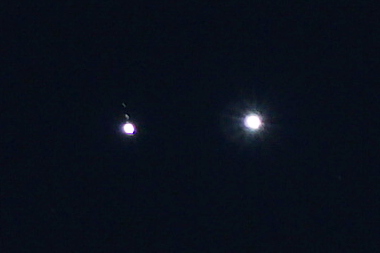
Closeup: two white circles against a dark blue background. The one on the right is bigger and has diffraction rays radiating from it. The one on the left doesn't, but there are two faint, blurry dots above it aligned with the disc.

The brighter planet to the right is Venus. The almost-as-bright one to the left is Jupiter. Venus shows diffraction rays, but Jupiter doesn’t…but those dots lined up on one side of it? They’re in the right location to be Callisto, Ganymede and (possibly) Io!

I’ve got to remember to use the telephoto after getting the wide shot the next time I’m taking night sky photos with planets. Just in case.
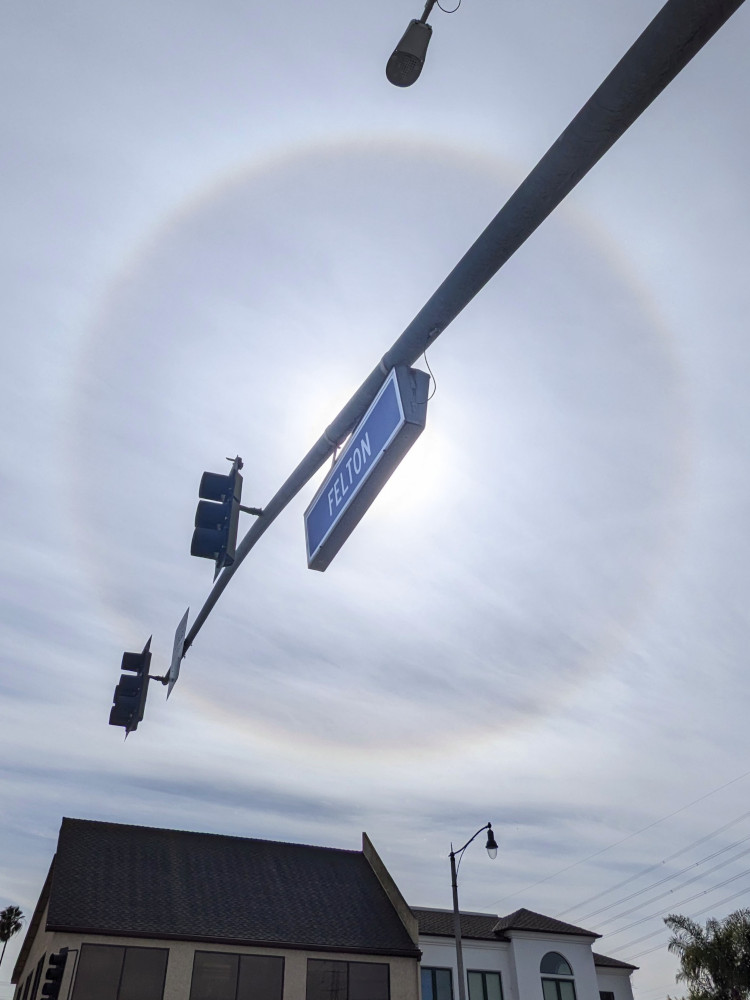

A 22-degree circular halo spotted today, caused by sunlight refracting through ice crystals in the thin cloud layer.

A bright ring surrounds the sun, which is blocked by an overhanging street sign.

A full 22-degree circular halo spotted today, caused by sunlight refracting through ice crystals in the thin cloud layer. (It was around 65F at ground level.)

These halos are about the same width as a 1x photo on my phone (and most point-and-shoot cameras I’ve had), so I used the wide angle mode to catch the whole thing and then crop it down. I bumped up the saturation a little, but otherwise it’s unprocessed.

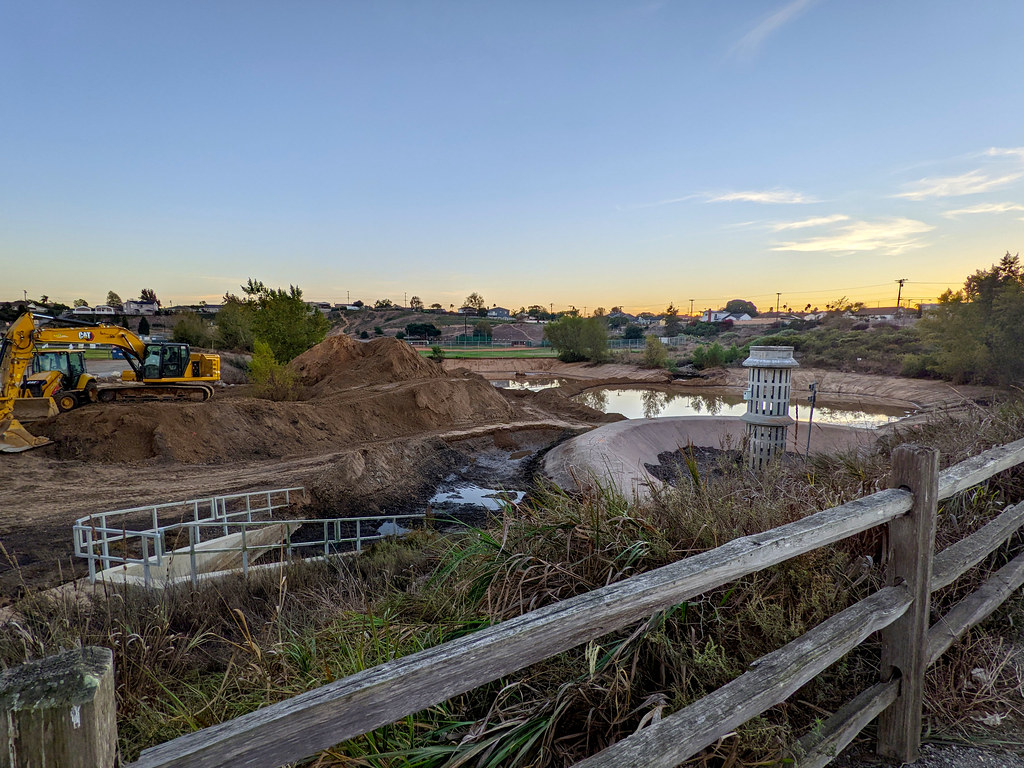
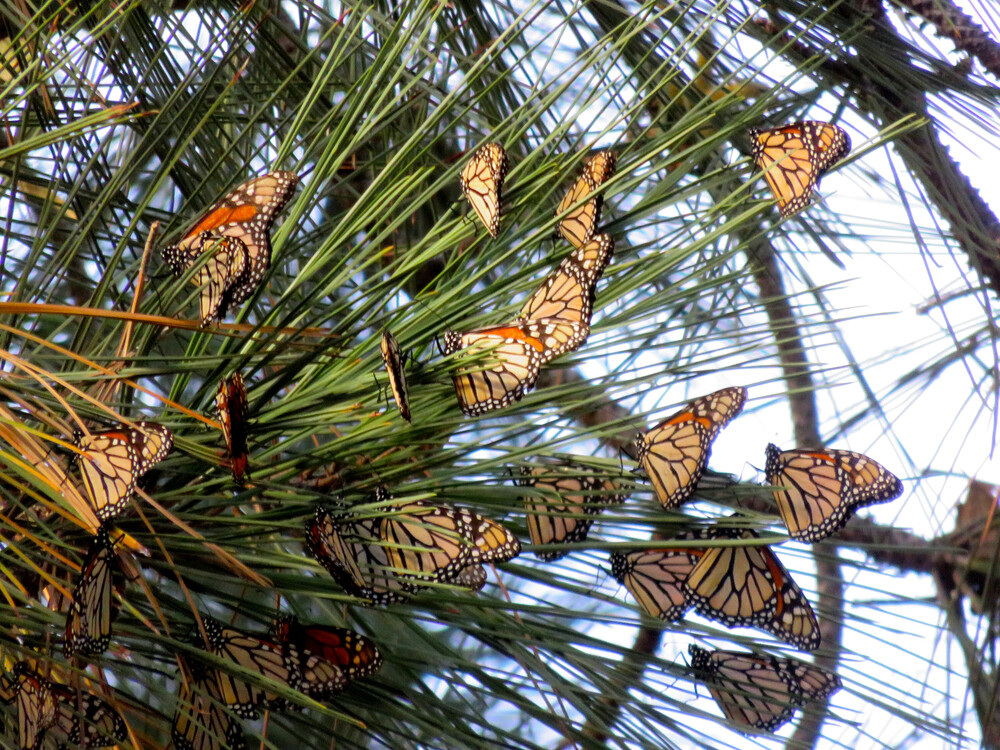
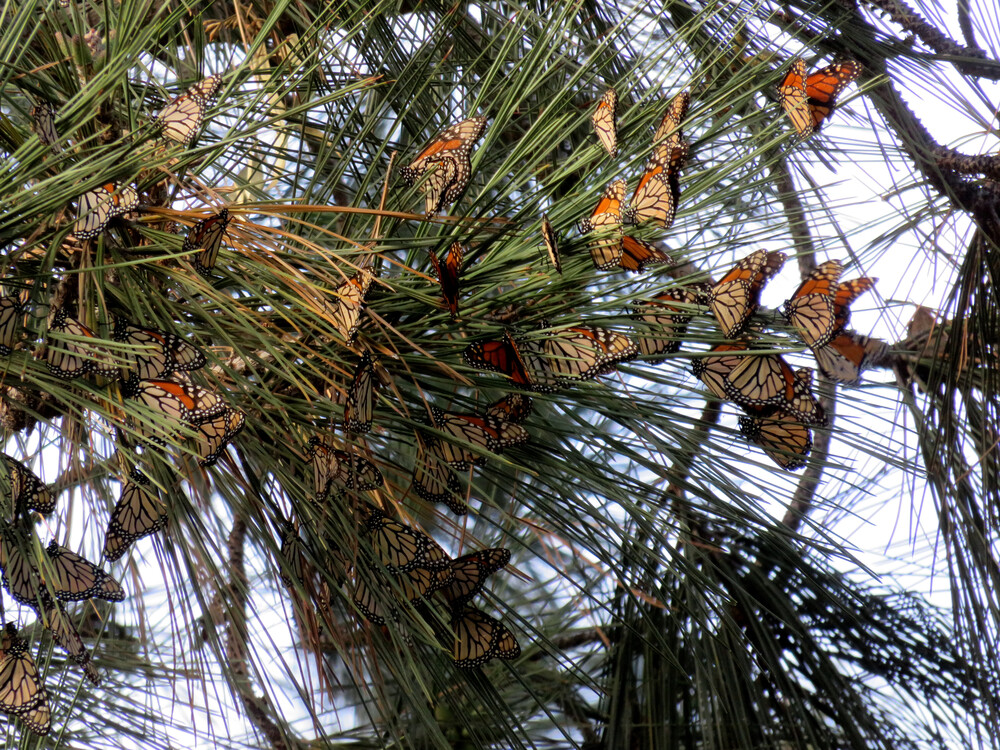
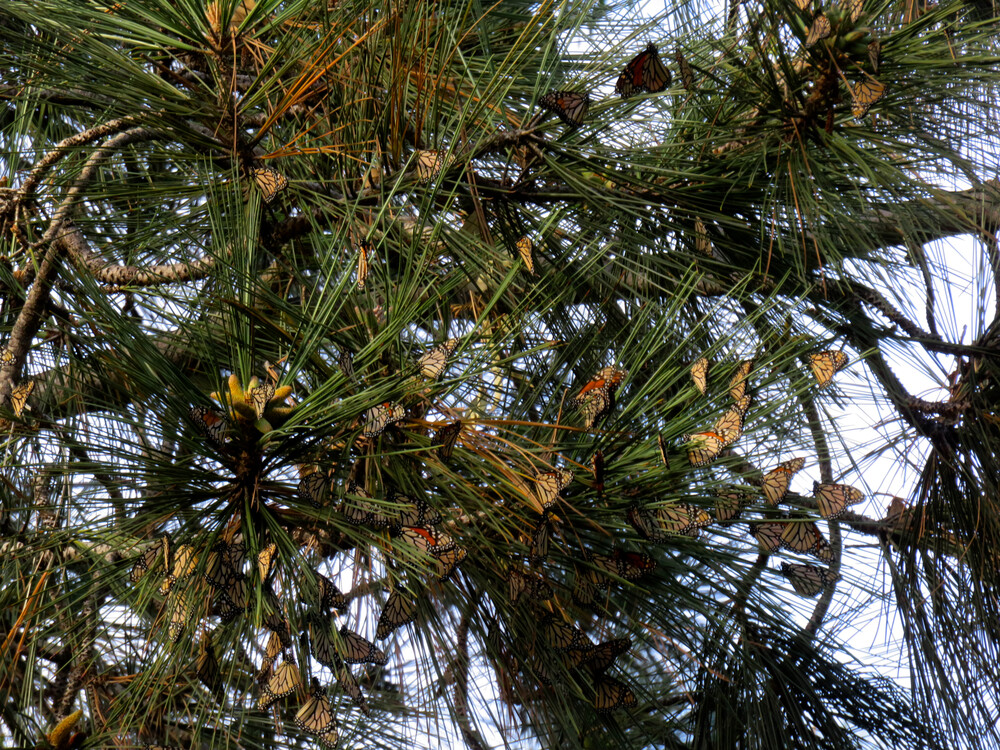
From this afternoon’s walk along the greenbelt: About as many monarch butterflies in one photo than I’ve seen in the last few years!

A lot of orange-and black butterflies on a pine branch, most of their wings closed.

There were a whole bunch of them clustered on a pine branch above the path. I wouldn’t have even seen them, but other people out walking had stopped to check them out.

I was just reading that this year’s overwintering monarch count is up to over 200,000 – a huge improvement over last year’s count of, I kid you not, 1,914. Though still not up to the millions that were regularly seen as recently as the 1990s. That article lists ways you can help the iconic species rebound, or you can follow the Xerces Society’s Monarch Call to Action.

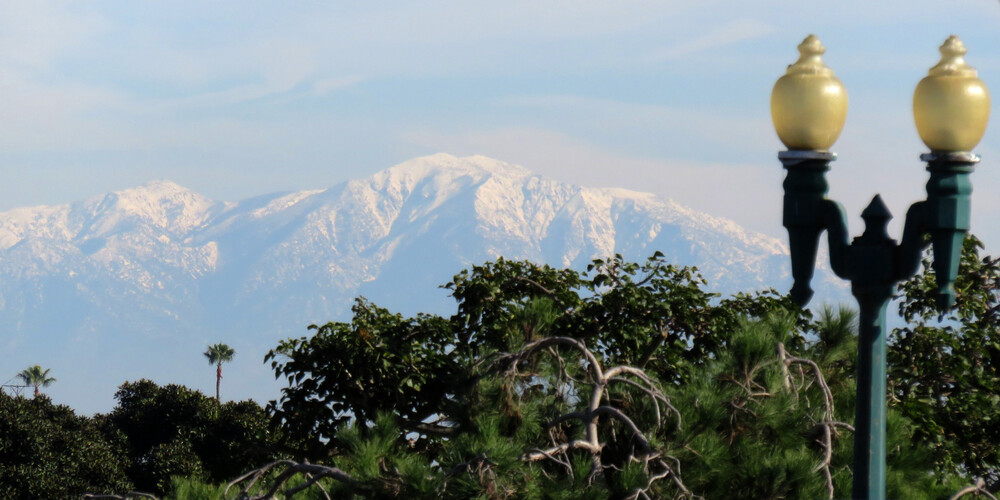
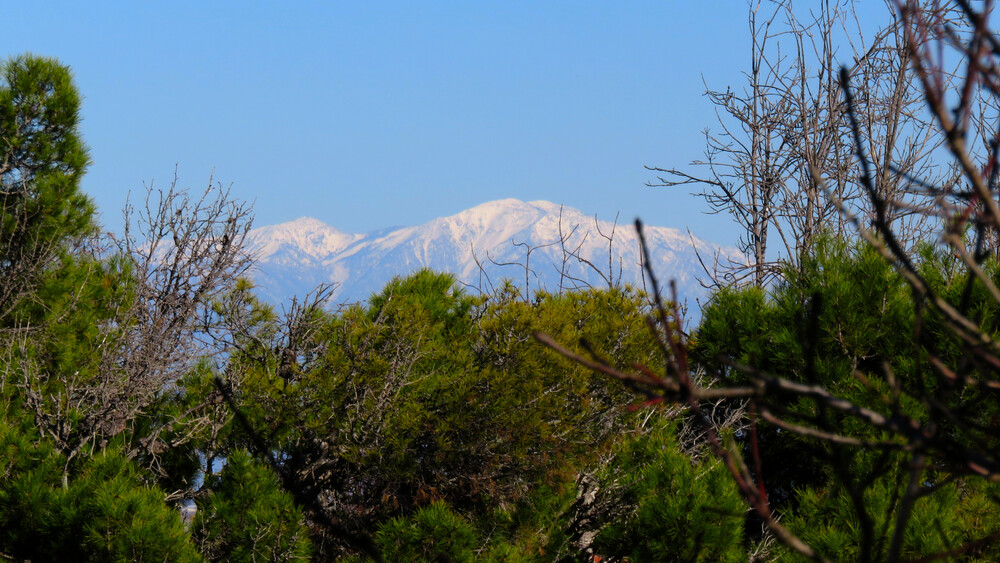
We actually got quite a bit of rain (for Southern California, anyway) in December, and the mountains have stayed cold enough that the snow has stuck around for a few weeks!

Here’s a view of the San Gabriels in mid-December, after a big storm.

Snow-covered mountains in the distance, with partly cloudy sky above and green trees and a lamp post in the foreground.

And here’s a comparable view a week into January.

Snow-covered mountains in the distance, with blue sky above and green pine trees in the foreground.

Nowhere near as impressive as, say, the entire range being covered in 2008, but that’s a rare occurrence even in non-drought years…and we’ve had mostly warmer and drier years since then.

ยปAll pages site-wide with this tag