Microsoft has jumped on the ditch-IE6 bandwagon with IE6Countdown.com, following in the footsteps of such campaigns as Browse Happy, End 6, and Save the Developers.

Of course, since it’s a Microsoft-sponsored campaign, it’s only promoting upgrades, rather than promoting an upgrade-or-switch message.

Static HTML points out why you might want to put your effort into some other campaign instead. Because IE6 Countdown is only an upgrade campaign, and IE6 users are all on Windows XP or below (Vista ships with IE7), they can only ever upgrade as far as IE8. Given the huge gap between IE8 and IE9 in terms of standards support, HTML5, CSS3, and so forth, IE8 will soon become the new millstone around the web’s neck.

So instead of plugging IE, consider plugging your own favorite browser, be it Firefox, Chrome or Opera. Or perhaps plug another switch campaign. After all, there are quite a few alternative web browsers out there!
I use navigation on my Android phone to pick out the best route to work each morning. The problem is, it bases time estimates on traffic conditions now — not traffic conditions as they’ll be when I get to each point along the route. I’ve gotten used to the morning drive taking at least 15 minutes* longer and the evening drive taking around 10 minutes less than predicted, but a little more precision would be helpful.

Obviously, Google isn’t psychic. They can’t predict where and when car crashes will happen. But they do have historical traffic data. If you go to Google Maps on the web and display traffic, you can switch between live data and an average for a given time and day of the week.

It would be fantastic if Google used that data to predict how much slower (or faster) traffic will be moving at each point along each projected route, and use that for the time estimates. It would be nice for the “Are we there yet?” factor, but it would be incredibly useful for route planning!

*Sometimes more. This morning, it predicted a 55-minute trip. It took me an hour and 35 minutes.

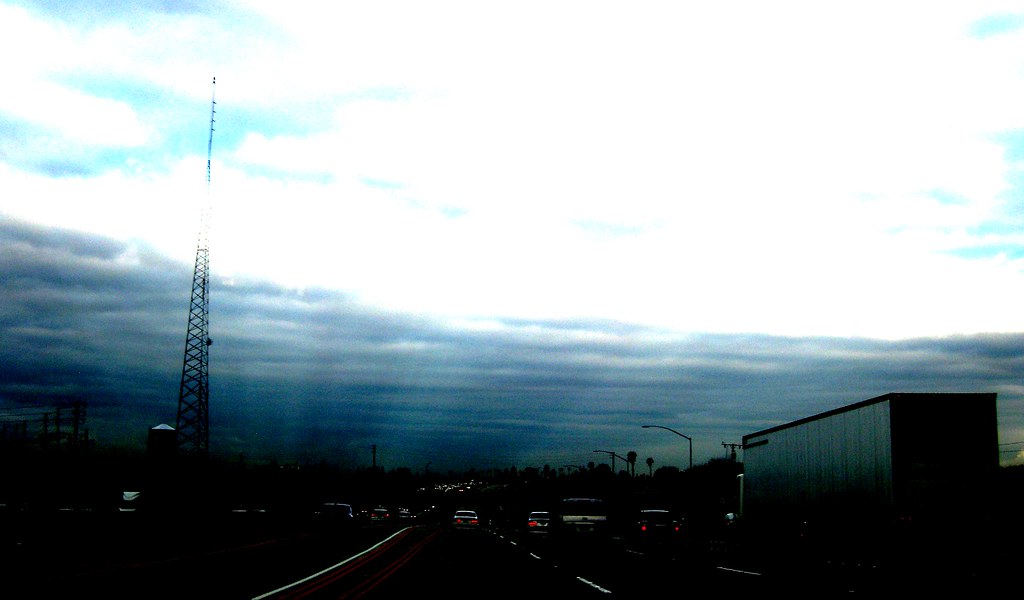
Rays of light and shadow converge in the distance.

Believe it or not, this is looking *away* from the sun. Sun rays are (at this distance, anyway) basically parallel, and a trick of perspective makes it look like they converge toward the sun or, in this direction, toward the point exactly opposite, like looking down a long hallway.

Ever since I read that these were possible under the right circumstances, I’ve been hoping to spot them and (if possible) photograph them. I saw some once while looking toward the mountains a year or two ago, but they were too faint to photograph. Naturally, when I finally saw them again, I was driving, and didn’t have time to stop and aim. Amazingly enough, one of the photos I took just pointing the camera out the window actually caught the rays!

Contrast enhanced to make the rays more visible. You can also check out the unmodified version.

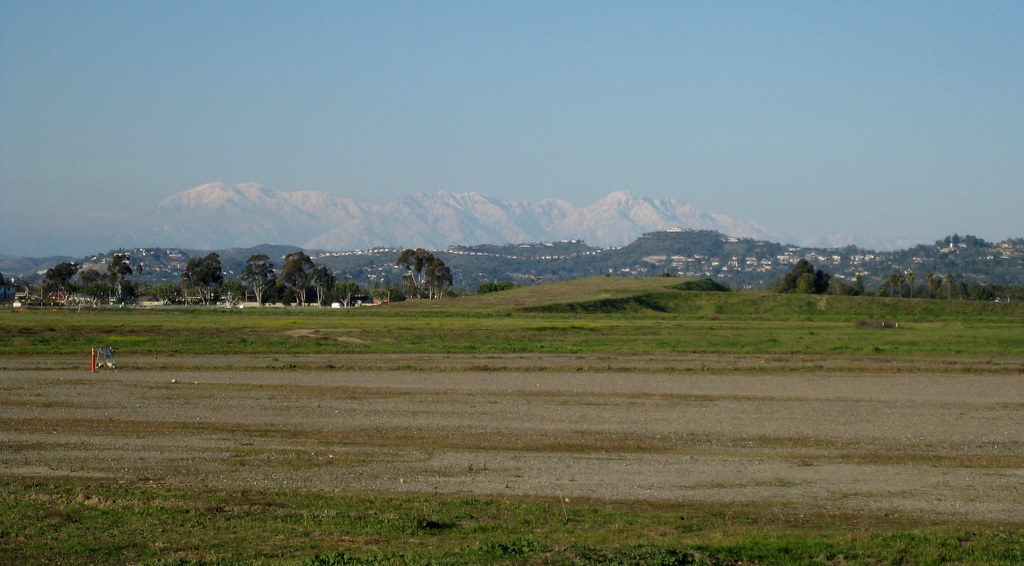
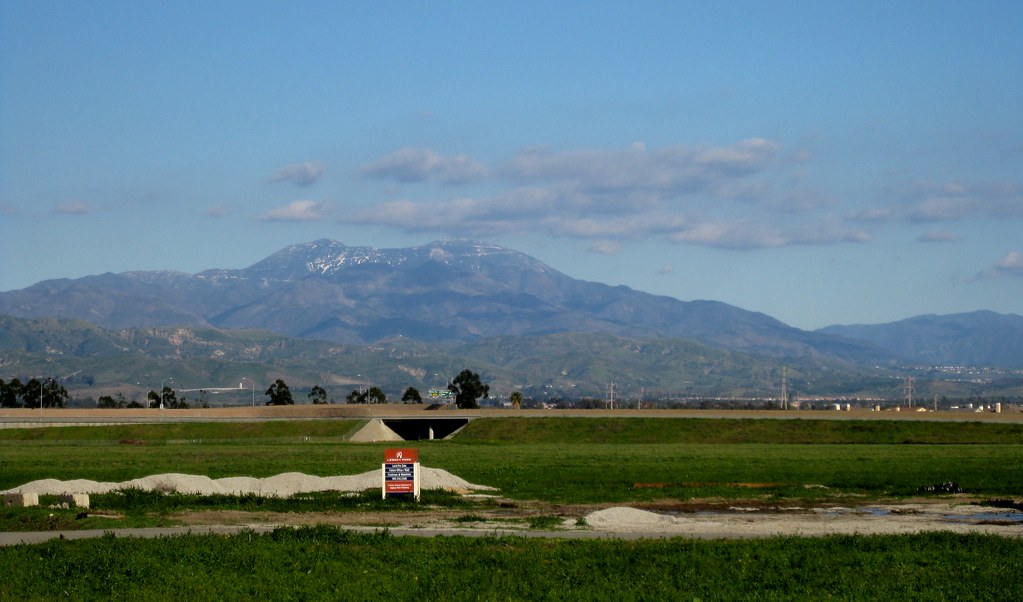
The rain on Friday dropped the annual light dusting of snow on Saddleback. I caught glimpses of it while out walking with J on Saturday, but the peaks were still shrouded in clouds. Sunday, however, the sky was almost completely clear.

I kind of wish that sign wasn’t in the middle there, but my Photoshop (well, Gimp) skills aren’t quite up to it. Maybe I’ll give it a shot with context-aware fill at some point.

It was awfully hazy toward the north, though, and you can see the San Gabriels are fading into the haze toward the left of the frame.

These were taken at the same spot as the loooong snowy panorama from January 2008, the Misty Mountains from December of the same year, and the cloud window panorama from January 2010. (I should really just come up with something to tag all the photos I’ve taken there.)