I’ve long disliked the term “culture war,” partly because it’s tossed around in a way that trivializes the issues and partly because “War on whatever” framing tends to confuse the issues.

But I keep thinking of a line in Cat Valente’s novel Space Opera about what war is. And when it comes down to it, what we’ve got now is a war: It’s about who gets to be treated as a person, and who doesn’t:

But in the end, all wars are more or less the same. If you dig down through the layers of caramel corn and peanuts and choking, burning death, you’ll find the prize at the bottom and the prize is a question and the question is this: Which of us are people and which of us are meat?

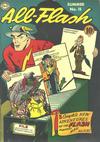
All-Flash 15Two months ago I picked up a copy of the comic book All-Flash #15 (Summer 1944), published during the thick of World War II. In the bottom margin of each page is a slogan, in rhymed couplet form, on how children could help with the war effort:

  • Bottom Lines on Following Pages Tell What to Do While Battle Rages
  • Tin Cans in the Garbage Pile Are Just a Way of Saying “Heil!”
  • Waste Fats in Good Condition Help to Make Fine Ammunition
  • Boys and Girls, Every Day, Can Give War Aid in Many a Way—
  • Every Time You Buy a Stamp, You Feed the Flame in Freedom’s Lamp
  • If You Have an Extra Quarter, Buy a Stamp to Make War Shorter
  • However far soldiers roam, the want to have some mail from home
  • Collect Old Paper, Turn It In—Help Your Uncle Sam to Win
  • You Can Walk to School and Store! Saving Gas Helps Win the War!
  • Boys Are Smart, Girls Are Wise, Black Markets Not to Patronize
  • IF YOU STILL HAVE METAL SCRAP, TURN IT IN TO BEAT THE JAP
  • Turn Out Lights Not in Use —War Production Needs the “Juice”

Case and punctuation are preserved as closely as possible. Continue reading

I haven’t seen 300 yet. But not because I’m not interested in the story.

I hadn’t heard of the Battle of Thermopylae until a few years ago, when I picked up a book called Atlantis Gate, by Greg Donegan. It was a sci-fi/fantasy thriller involving a war across time for the fate of the world. One front was ancient Greece, with one side aligning with the Spartans, and the other with the Persians. IIRC, the Spartans had to protect a gate in the pass until either someone could get a message through, or someone could close it. I actually found that the most interesting part of the book. The rest felt too much like it wanted to be an action movie. (About 2/3 of the way through I discovered it was actually the final book in a series of four. It didn’t grab me enough to pick up the earlier ones.)

Not long afterward, I started reading Harry Turtledove’s Videssos Cycle, in which a Roman legion gets transplanted to a sword-and-sorcery world. Among their number is a Greek doctor, who remarks at one point about the very same battle. At this point I realized that Donegan wasn’t making everything up, and started reading up on the actual battle.

So when I heard about the Frank Miller/Lynne Varley graphic novel, I put it on my wish list. Eventually I picked it up, read it, and enjoyed it. Then I heard they were making a movie, which sounded really promising.

Then the first previews aired, and it looked… well… overblown and hammy. Even the good reviews make it sound like two hours of hack-n-slash.

I think I’ll wait for the DVD.

(Sort of vaguely a response to Warren Ellis’ recent remarks on “Bad Signal” that he hasn’t seen 300 because he read the book—and didn’t like it.)

Irish and Mexican FlagsI caught a story on The World (PRI) today about Los Angeles band Ollin’s song tribute to Saint Patrick’s Battalion (in Spanish, El Batallón de Los San Patricios)—a group of several hundred primarily Irish Americans who, during the Mexican-American War (1846–1848), left the US Army to fight alongside the Mexicans. They fought fiercely for a year, but came to a bad end: most were captured by the US and executed as traitors.

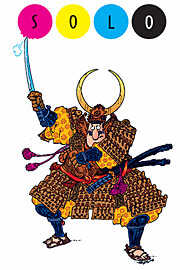
Cover of Solo #11It reminded me of a story Sergio Aragonés told last year in his issue of Solo (#11). In “Heroes,” he talks about growing up in Mexico, where the San Patricios are national heroes. They have statues, memorials, and a commemorative ceremony every year on the spot where they were executed. After telling the story of how he learned about the battalion, he jumps forward a few decades. Living in the US, with his daughter going to American schools, he wanted to see how she would learn about the heroes of his youth. So he looked through her textbook to the section on the Mexican-American war, and found only a fleeting remark about how a bunch of drunk Irishmen deserted the US Army, surrendered, and were executed.

It was a surprisingly serious story from an artist known for his comedy (some of the other stories in the issue are drop-dead funny), and an interesting commentary on how nationalism shapes our views of history, with one side elevating the battallion, and the other trivializing them.

»All pages site-wide with this tag