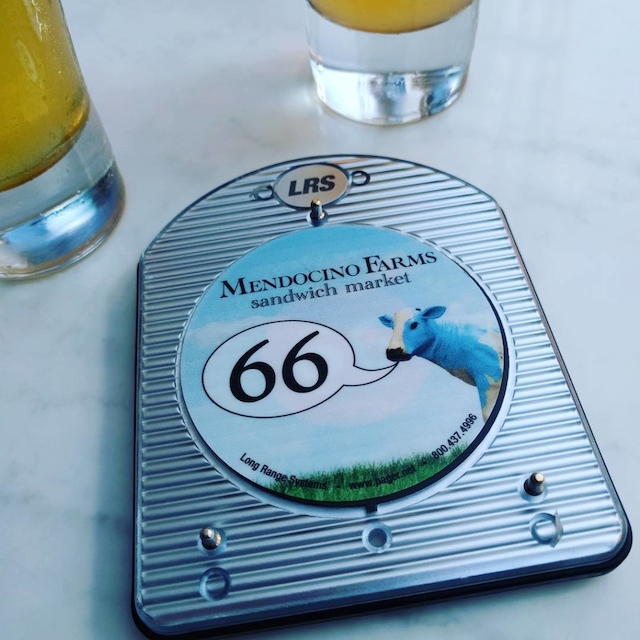
I bet they get really annoyed when you call and ask to “Talk to Chuck.”

I bet they get really annoyed when you call and ask to “Talk to Chuck.”
You’ve probably heard about Instagram’s new terms of service, which claim the right to sell your photos. [Update: Instagram has posted a “that’s not what we meant!” statement and promised to revise that section.]
To help us deliver interesting paid or sponsored content or promotions, you agree that a business or other entity may pay us to display your username, likeness, photos (along with any associated metadata), and/or actions you take, in connection with paid or sponsored content or promotions, without any compensation to you.
Monetization is one thing, but selling my creative output, using it or my likeness for advertising, without my permission? That’s stepping over the line. Add this to the recent decision to hide image previews from Twitter, and a pattern emerges of a service that was once open and free starting to close ranks.
I’m not personally worried about Instagram in particular. I’ve only really dabbled in it over the last few months, treating it most of the time as a first draft for Flickr. I have maybe 50 photos and a handful of followers, and most of the people I follow there are also on other networks. If Instagram doesn’t back down or clarify the language [Update: they did], I can easily repost the photos I want to keep online and go somewhere else.
I am worried about the trend it highlights: You can’t always rely on social media.
And I am worried about the fact that these changes were announced after the Facebook acquisition went through, and after Facebook revised their terms so that they no longer have to put new terms of service to a vote. I’ve got a lot more invested in Facebook than I have in Instagram.
Where Have All The Photos Gone?
I used to blog about web browsers at Spread Firefox and Opera Watch. Both sites are long gone. Countless articles I’ve linked to have vanished as publishers restructured or went out of business.
I’ve got an extensive LiveJournal from a few years back. It’s still there, but when I let my paid account lapse, I started moving over some of the less personal, more tech- and entertainment-focused posts (like convention reports) to this site, just in case a BOFH deletes it, or they change their terms of service to something unacceptable.
The question “Who owns your data?” has been repeated so often over the years that I can’t look up the post I’m thinking about, which advocated open file formats over proprietary ones (like Microsoft Office) on the basis that you should always be able to find a reader for a text document, but if you lose access to Word, or if Microsoft decides to drop support for an older format, you’re at their mercy.
The problem with social networks as services is that, like with those proprietary file types, you’re at their mercy. Want to search for a three-year-old Tweet? Tough. Facebook changed their privacy settings again? Oops. Twitter decides they don’t want apps like yours to exist, so they close off part of their API? Bye! The site you posted all your photos to decides to close up shop? *Poof!* There go your photos.
So What’s the Alternative?
When it comes down to it, the only way to be sure you aren’t going to be exploited or abandoned is to do it yourself.
Blogging is basically the same as social networking, except distributed:
The upside is that you, not Facebook or Google or Twitter, have full control of your content. The downside is that you have to exercise that control. You have to maintain the infrastructure, you have to guard against attackers, you have to filter out spam, you have to do your own backups, and you have to know at least something about the system under the hood.
We keep going to social networks because they’re so damn convenient. They take care of all that, and make your stuff easier for people to discover as a bonus.
But when you leave the network — or when it leaves you — what happens to all your photos, status updates, rants, raves, and commentary?
Who owns your profile?

I like the use of dual billboards in this Windows 8/Microsoft Surface tablet ad. It’s a creative use of the structure that only works in places that have this sort of setup, and works more effectively than cramming the whole thing onto one billboard would.
Please help support its continuing mission by donating to the Walk for Food Allergy.
Update: FARE no longer runs the previously-annual fundraiser, but you can still learn more about food allergies (and contribute more generally, if you’re inclined) at foodallergy.org.
Last month I had the good fortune to watch Endeavour’s landing at LAX from the office building where I work. Today I had the opportunity to see the space shuttle up close while it stopped at a parking lot in Westchester.
When I got to work this morning, the shuttle had already left the airport hangar where it had spent the last month, and was sitting in a parking lot a mile or so away. I didn’t have time to go look at it, but I did have time to climb up to the top of the parking structure and look for it.
The first thing I spotted was the distinctive tail, and I walked along the top floor until I could see as much of the shuttle as possible. It looked out of place surrounded by trees and a Staples sign, though I couldn’t help thinking, “Space shuttle? Yeah, we’ve got that.” I took a few zoomed pictures with my camera, then one really grainy with my phone for the “now” impact, then headed into the office. Continue reading
I caught this view of the clouds lit up by the setting sun out of the corner of my eye on the way home tonight, and decided that I had to turn around and find someplace with a relatively unobstructed view. The beach would have been perfect, but also would have taken too long. In a pinch, I picked the top of a hill along an east-west street.
At first I was reminded of a dragon, but as I watched it, I started thinking it looked like a bird. I was going to call it “Sunset Phoenix” until I realized it would sound like a sunset in Phoenix, Arizona. Neat, I suppose…but not as intriguing as a fire dragon.
It’s astonishing how short the Internet’s attention span is these days.
Last Friday I made a point to post my photos of Endeavour’s final flight as quickly as possible. The shuttle’s carrier landed just before 1:00pm, and I put off grabbing lunch until I had uploaded my best pictures. My Flickr traffic jumped up by a factor of 5 that day…and was back to normal on Saturday.
A few years ago, I could post convention photos a week or more after the event and people would view them in significant numbers. If a convention ended on Sunday, I usually tried to put my pictures online by Monday or Tuesday, then add them to groups over the course of a week. These days, if the photos aren’t up during the con, no one seems to care. And even if they’re up, they’d better be labeled and submitted to groups immediately. Sure, there’s a bump, but by Tuesday, interest is already dropping off.
Sometimes it seems like even waiting until evening to transfer photos from the camera is too long. If it’s not pushed straight from your phone to Instagram within five minutes, your potential audience is already moving on to the next thing.
I used to review Flash comics at Speed Force, but it became clear that whenever I missed the day of release, I got half as many readers, and if I didn’t have the review up by the end of the weekend, only regular readers would even see it. And there wouldn’t be any discussion, because everyone had already hashed things out on other sites.
A while back, I wondered, “Is now better?” I guess I have the answer: “Yes, if you want people to actually see it.”