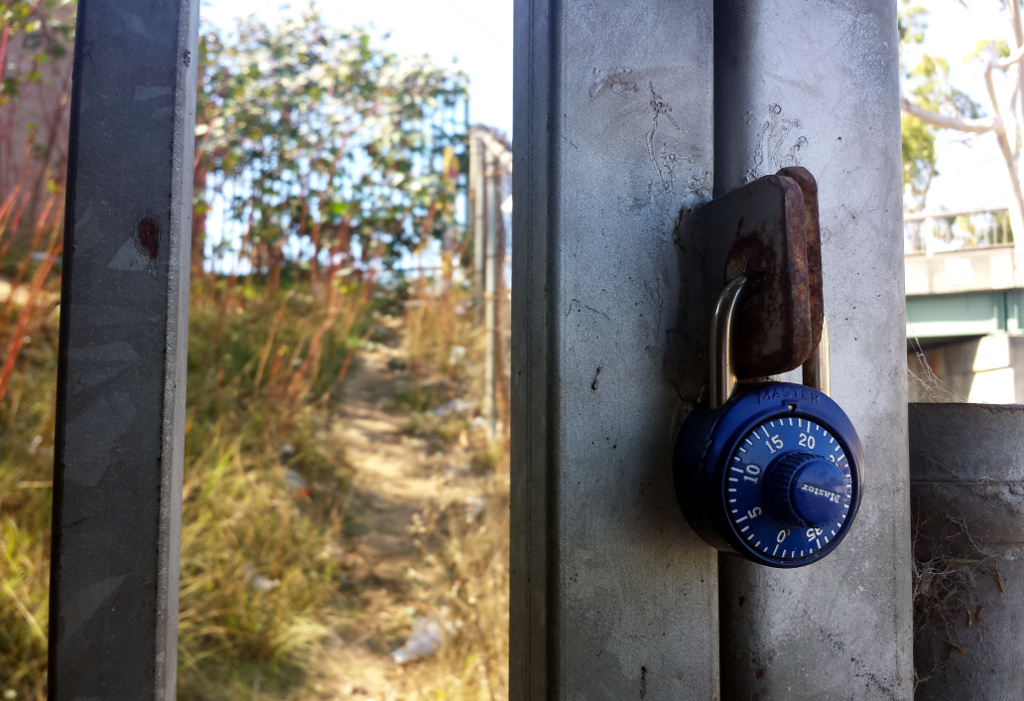
Close-up: looking between bars of a metal fence. 2 bars are locked together with a combination lock. Behind the gate we can see a blurry path uphill and scraggly bushes, with another fence at the top of the path.

Behind this gate, a path leads up a narrow access way to a railroad bridge.  Clearly people do get in there from time to time based on the trash – or maybe they just throw it over the fence from the sidewalk. Once I saw two people up on the bridge doing a photo shoot. They probably didn’t get there through here — a block south, there’s an at-grade crossing without any gates, and anyone could easily walk along next to the tracks as long as they keep alert for trains.

It got me thinking about how some boundaries are there to block access, and some are there purely for organizational purposes — consider the property line between two neighbors, defining responsibility for upkeep on each side — and while some of the obstacles we put up are intended to keep people out, sometimes they’re only meant to slow people down or send them down another path.

And then there are the boundaries like the tracks themselves: Structures that aren’t intended to separate regions, but nonetheless just by existing define a near and a far side. Railroads, highways, even natural features like rivers and mountains split communities, climate zones, ecosystems, and nations.

But people are also good at getting past obstacles. We build bridges and tunnels. We find places to ford streams. We find mountain passes, and blast them out to make them easier to cross.

And sometimes? We just go around.

Photo challenge (WordPress): Boundaries

Christmas Aisle in Costco - in early OctoberChristmas strikes deeper into Halloween’s territory, continuing a relentless campaign that began decades ago in response to a 1993 incursion from Halloween Town.
In recent years, Halloween has shored up its position by moving into previously unclaimed parts of the calendar in early October and September, itself running roughshod over tentative efforts by Oktoberfest to establish a foothold. Growth of adult Halloween parties with free-flowing alcohol have ensured that Oktoberfest can only offer one advantage over Halloween: Lederhosen. And you can wear those on Halloween too.

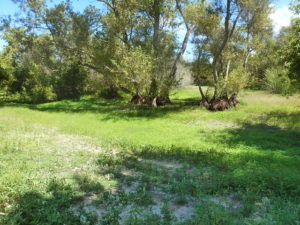
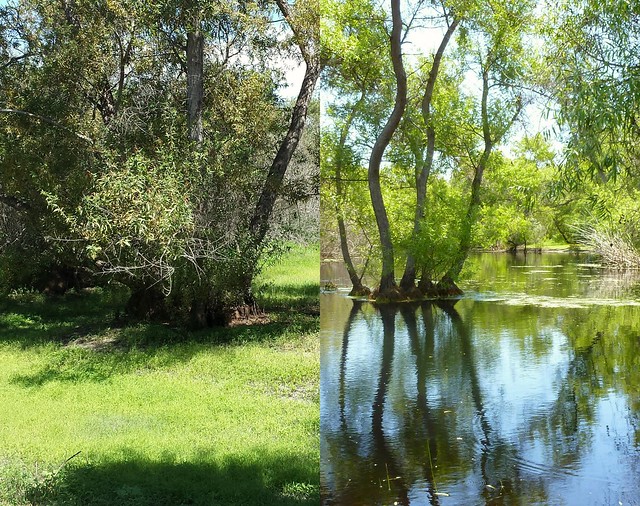
Spring: trees growing out of a pond. Summer: trees with a lot more branches growing out of dry ground with lots of grass.

Finally put together a before-and-after shot!

On the right: May in Madrona Marsh, after winter and spring rains filled up the low-lying areas of the preserve.

On the left: Late August in the same spot, after summer had dried up the pools. Despite the drought, and helped along by a couple of freak summer storms, the ground is still holding onto enough moisture that the floor of the vernal pool is covered with low greenery instead of dry grass.

I know, it’s always better to put “before” on the left, and I tried it with that layout, but it ended up looking better this way.

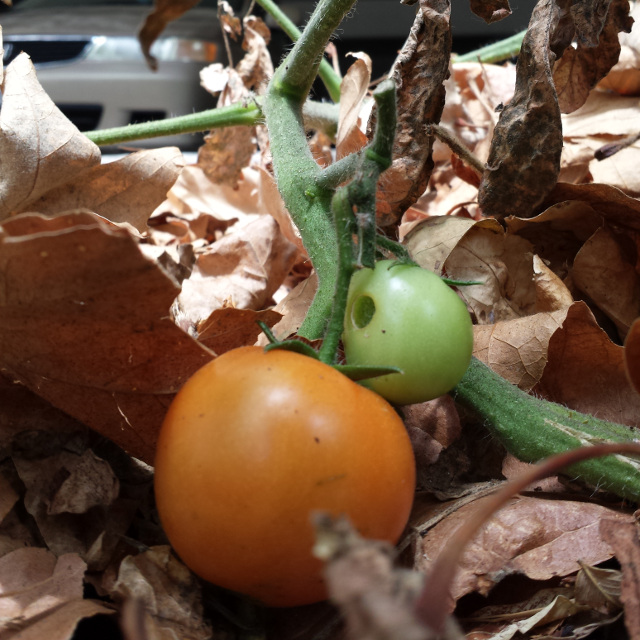
We’ve been joking about feral tomatoes for years, but recently I’ve started observing them in the wild.

Feral Tomato turning orange

So to speak.

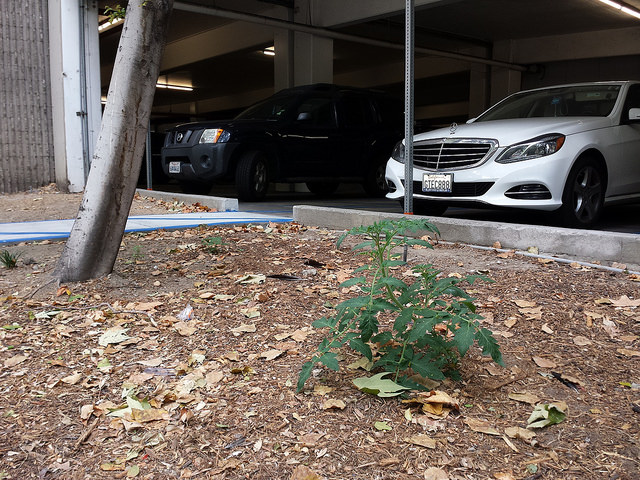
Sometime last spring, a tomato must have been dropped in the planter next to the parking structure near work. One of the seeds sprouted, and that plant somehow survived all the remodeling and landscaping.

Feral Tomato by the parking lot

By June it was growing its own tomatoes. In fact, it was growing more tomatoes than the plants in our garden. Continue reading

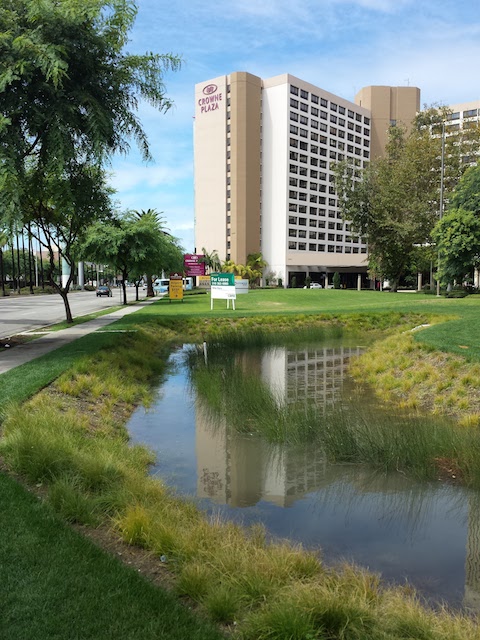
Stormwater Pond Reflection

It rained pretty hard last night near home, and clearly it rained hard enough here that mud was flowing over the sidewalks, and the stormwater detention pond still had water at noon.

It’s funny how, four years into the worst drought in ages, we’ve had one of the wettest summers on record. Considering that LA usually gets no rain to speak of during the summer, that’s not saying much, but we’ve had several storms strong enough to cause floods and mudslides in the middle of a drought. We’re all hoping for a wet winter.

On a related note, yes, they’re still watering the lawn too much here. At least there’s a lot less of it than there used to be before the renovation, between the hollow and all the planters full of native and otherwise less-thirsty plants and wood chips behind where I was standing.

Also, ZPizza opened earlier this month, completing the trio of restaurants on the ground floor of the new hotel. More lunch options!

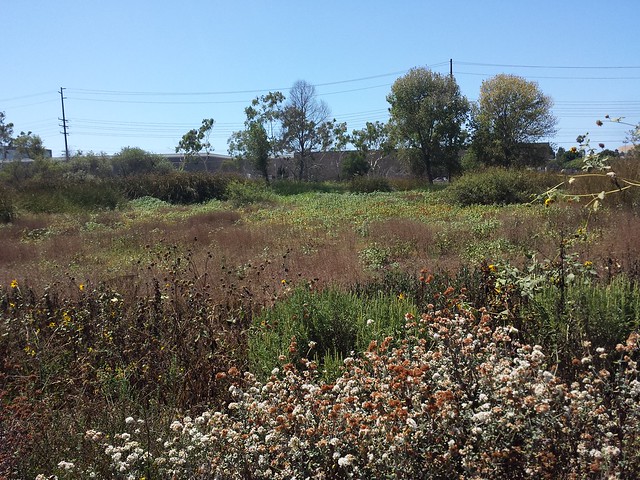
At the end of August I returned to the Madrona Marsh Preserve. It’s a fragment of the seasonal wetlands that used to dot the western edge of the Los Angeles basin, just inland from the coastal hills. These low-lying areas collect water during winter and spring rains, then slowly dry out over the summer, only to fill up and become wetlands again the next year.

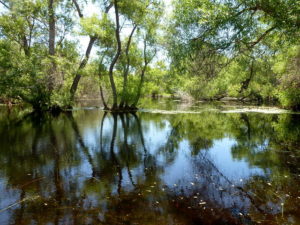
On a hike in May I found extensive pools and lots of wading birds. Trees kept some parts shady. Scrub prevailed on the higher ground.

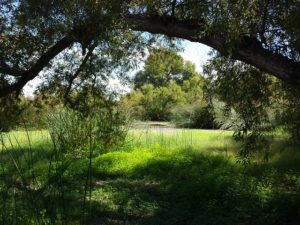
Returning at the end of summer, I found the area near the entrance looked about the same as it had before. As I got closer to the low-lying areas, the scrub seemed to have grown thicker. The pools were gone, but the ground where they’d been was clearly still wetter than the area around it. Plants were greener, and in some places it was still muddy.

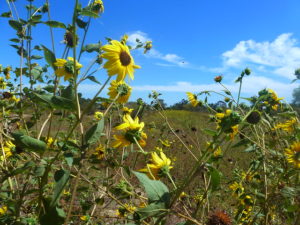
There were also fields and fields of wild sunflowers. Most of the places that had been mud flats in spring were now covered with sunflowers. Some areas I’d walked to get closer to the pools were completely blocked. I saw dragonflies, and in a few places I found bushes that were absolutely covered with clumps of foam from some sort of bug.

Once I reached the tree-covered area, I walked a trail that had been underwater the last time. It seemed to end abruptly until I realized that a tree limb had snapped and fallen to block the trail. It was still attached about ten feet up.

In the lowest, shadiest part of the preserve, I did find pools that were still wet, and still host to a few wading birds. I wonder if I return in, say, November, will they have dried out as well, or is there a last bastion that stays flooded all year (at least in years with normal rainfall)?

I didn’t recognize the spot at first, or I would have tried to frame it the same way, but I did manage to get shots of the same clump of trees flooded in spring and surrounded by dry land and low plants in summer. It was interesting to see the spreading roots without the water.

You can view the full Spring hike (23 photos) and the full Summer hike (8 photos) on Flickr.

»All pages site-wide with this tag