I’ve written about the trouble with using mobile apps in dead zones before, so I’m happy to see that I’m not the only one thinking about the problem. Hoodie wants to design for offline first, and is starting a discussion project around the issue.

Offline reading is an obvious application. Most eBook readers handle that just fine, though it’s easy because you spend a lot of time in each book so it doesn’t need to predict what you’ll read next. It would be great if Feedly would sync new articles for offline reading. Heck, I’d like it if Chrome on Android would let me re-open recent pages when the connection dies.

Beyond reading, many actions can be handled offline too. Kindle will sync your notes and highlights. GMail will let you read, write, label, archive, delete, and even send messages without a network connection. All your actions are queued up for the next sync.

There’s no reason this approach can’t be taken with other communications apps for messages that don’t require an immediate response, even with services like Facebook and Twitter. Short notes of the “don’t forget to pick up milk” variety. Observations. Uploads to Dropbox. Photos going to Instagram or Flickr. Buffer would be perfect for this, since you’re not expecting the post to go out immediately in the first place. It shouldn’t give you an “Unable to buffer” error, it should just save it for later.

I’d like to be able to do work in a place where there’s no connection, have that work persist, and fire things off as I finish them instead of having to come back to all of them the next time I’m within range of a cell tower or a coffee shop with wifi. I’d also like to be able to post in the moment, hit “Send,” and move on with my life, instead of having to hang onto that extra context in my mind as I walk around.
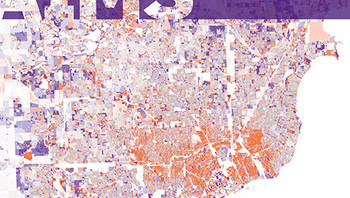

Every time I listen to Vienna Teng’s song, “The Hymn of Acxiom,” it gets creepier. It’s beautiful, it’s haunting…and it’s all about how big data is keeping track of every trace we leave, piecing together a more and more detailed picture of each of us in order to feed us back the perfect, tailored life, and isn’t that what we wanted?

Tracking. Privacy. Social media. Filter bubbles.

And I always think, “I need to post something about this on Facebook…”

And that just creeps me out more.

Have you ever abandoned an email address? Did you make sure everyone switched to your new one? If your old provider has reissued the address to someone new, your old contacts could still be sending mail to someone else with your personal information.

This shouldn’t be a surprise, but InformationWeek reports that Yahoo! users who’ve picked up recycled addresses are getting important mail meant for the previous owner of the email address.

It started off with some stuff from catalogs and clothing companies and I thought, ‘That’s fine, I’ll just unsubscribe.’…But then I started getting emails with court information, airline confirmations, a funeral announcement…

Update: Yahoo! is introducing a “not my email” button to report mistaken deliveries.

Well, that’s an interesting approach to the misdirected email problem. This might even be useful as a general solution beyond recycled addresses. I once ended up receiving someone else’s Sears receipt and promotions, I assume because of a sales clerk’s typo.

But I find myself wondering about the potential for backscatter, collateral loss of mail, and just how people will actually use it in relation to the report spam button.

And that’s just with the honest people who get the reused mailbox!

Update 2: For commercial email especially, XKCD points out the importance of actually verifying that the email address someone gave you is theirs, and not someone else’s address written as a typo, and Word to the Wise highlights some real-world cases they’ve written about in the past.

Originally posted as two link posts on Facebook and one on LinkedIn.

Interesting idea: The Human Body as Touchscreen Replacement. The downside to using a touchscreen over something with physical controls is that you lose that instant feedback of where the buttons are. (Skip a song on an old-school iPod while driving? Easy. Do the same on a touchscreen? That’s trickier.) Your own location sense plus knowing exactly what part of your hand (or, in another prototype, ear) you’ve touched could really improve usability for applications that are suited for it.

Apple and Amazon have settled their two-year legal dispute over the term “app store.”

It’s about time common sense prevailed. Even though Apple had the gall to deny it, “app store” is as obviously descriptive of a store selling apps as “book store” is of a store selling books, or “grocery store” of a store selling groceries. Insisting on trademark protection was ridiculous.

Actually, that reminds me of the time way back when that Barnes & Noble (I think it was B&N, anyway) tried to bring a false advertising claim against Amazon for saying that they were the world’s largest book store. The idea was that since Amazon didn’t have a physical storefront, they weren’t a book store, but a book seller. I seem to recall that didn’t stick either, but took a similarly ridiculous time to settle out.

»All pages site-wide with this tag