I ordered tickets for an upcoming production of The Phantom of the Opera (the Andrew Lloyd Webber musical) and something occurred to me: In all likelihood it’s going to be an exact replica of the 22-year-old London production (with a few concessions to the realities of touring). When did this start happening?
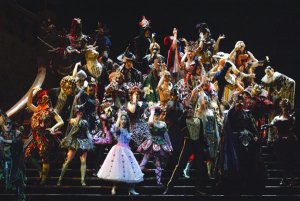
A bunch of people in different gaudy costumes standing in a crowd on and in front of a wide staircase.Most of the time when someone puts on a play that’s been done before, they take the script and do their own thing with the sets, costumes, and performances. This is generally true with older musicals as well; people generally aren’t worried about seeing the original staging of, say, The Sound of Music. But these days, when a big show goes on tour, audiences expect the same experience they’d get on Broadway or in the West End.

Les Miserables opened in London in 1985, went through some tweaks on the way to Broadway, and then every production worldwide for the next 10 years was identical save for cast and translations. They retooled the show for the 10th anniversary, and those changes stuck around until they decided to cut it so that they wouldn’t have to pay the orchestra overtime.

Same with Miss Saigon: opened in London, tweaked as it went to Broadway, then frozen until 2003, when it was retooled to make touring simpler (fewer sets on palettes, using a projection of a helicopter instead of a model on a boom, etc. And let me tell you, watching a show about the Vietnam War during the week leading up to the Iraq War was an odd experience.)

It’s probably been 10 years since I saw Phantom (not counting the movie, about which the less said, the better), but I’ll be surprised if it’s much different (aside from cast) than the last time. I’m sure that’s what the rest of the audience is looking for, after all.
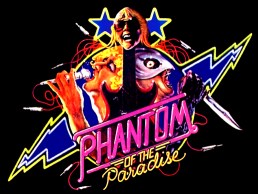
Phantom of the Paradise (album art)Watched Phantom of the Paradise this weekend. It’s a bizarre 1974 mash-up between The Phantom of the Opera and Faust set in a satire of the 1970s music industry.

The movie casts Paul Williams (who wrote all the music for the film) as a reclusive recording mogul, Swan, who steals a struggling songwriter’s pop cantata based on Faust to open his new music palace, the Paradise. The songwriter tries to correct the “misunderstanding,” ends up beaten, jailed, and ultimately scarred when he gets caught in a record press trying to destroy it. He sneaks into the newly-opened club, dons a mask, and alternately pursues revenge on the man who stole his music, and his obsession with launching the career of a young singer he befriended earlier in the film (bringing in the Phantom/Christine dynamic).

Believe me, it’s stranger than it sounds.

Anyway, afterward, I went looking on IMDB (as I often do) to see what else the various actors had been in. Somehow I ended up on a horror movie review site, 1000 Misspent Hours, which gave the movie 3½ stars and basically considered the music to be the main failing (though, since it’s a satire, that’s largely intentional. There’s a reason I only have about 3 of the film’s songs on my iPod).

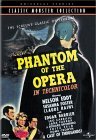
Phantom of the Opera (1943 movie poster)Something interesting I learned was that the Phantom’s origin is actually derived from the 1943 Phantom of the Opera movie with Claude Raines, which, judging by its review, has about as much to do with the original novel as, well, Phantom of the Paradise does. I’m mainly familiar with the original silent version and the Andrew Lloyd Webber musical, both of which track the Gaston Leroux novel fairly well. (Edit: Now that I think about it, the 1943 origin also explains the “Acid: Do not throw in face!” gag from Gremlins 2.)

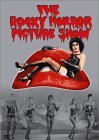
Rocky Horror Picture ShowI do have to take issue with some of his criticisms of Rocky Horror. Not that they aren’t valid, but that several things he finds inexplicable—the thin plot, nonsensical showstoppers, and how the cult following could possibly have started—are easily explained by the fact that it’s based on a stage play, The Rocky Horror Show (also explaining why the movie is The Rocky Horror Picture Show), which sets up a completely different dynamic and expectations. Interesting that the main venue for the film seems to be the midnight showings, which seek to recapture the experience of live theater.

I found the site’s rating system interesting: not only does he have a 1–5 star scale, but he also assigns negative stars for movies that are “so bad, they’re good.” So of course I had to see which films he gave -5 stars, meaning “So bad, it’s genius.” I ended up reading around 10 or so reviews on Sunday night, some of them for movies I will probably never, ever see.

Over the weekend, Something Positive’s Monette met her girlfriend’s half-brother, who wants to write showtunes when he grows up. Friday’s Real Life featured Tony taking Greg to task over singing a song from Monty Python’s Spamalot. Where did the showtunes=gay (or at least effeminate) stereotype come from? While we’re at it, where did the art=gay stereotype come from?

I mean, most of the people who actually write musicals are probably straight. Not all of them, of course, and some of the exceptions (Cole Porter, for instance) are rather prominent. And I would guess that a majority of the actors and audience are probably straight, also.

I have no doubt that the percentage of gays in the arts is higher than in the general population. I studied drama in college—all I had to do was look around to see that. But that’s a far cry from “most.” I mean, to pull some numbers out of thin air, let’s say it’s 20%, or even 30%, instead of the commonly-cited 10%—that would be like saying an industry with 30% women is primarily female. Continue reading

Just got an email from Disney on Broadway (I assume I must have given them my email address when I bought Lion King tickets several years ago) offering me advance tickets to their new Broadway show, Tarzan.

WTF?

Admittedly, I thought The Lion King was an odd choice for a stage musical, and it turned out to be quite good. But Tarzan? I mean, it’s a weird enough choice for a musical in the first place, but Disney’s cartoon wasn’t even really a musical—it was a movie with a Phil Collins soundtrack.

I wish I could remember exactly what Aimee Mann said last week when she introduced “Save Me.” It was something like “Yes, this is the song that lost the Oscar to Phil Collins and his cartoon monkeys monkey love song.” (Katie remembered it.) Apparently she says this regularly.

Bleah. I’d rather they put together a new tour of Beauty and the Beast. With any luck it’ll still be playing when we finally get around to visiting New York. (I honestly didn’t know it was still playing now until I went to look at the Tarzan info.)

Last night we went out to see Evita at the Orange County Performing Arts Center. It was a good production, but it was a slightly odd experience for me because it was based on the original staging by Hal Prince. Back in college, I was in a production of the show at school…and our director also based it on the original staging. Visually, the show was almost exactly what we would have done if we’d had the budget. (And a full orchestra, and more experienced actors, and so on.) They did make different choices in characterization at points—Eva was harder, Che was more comedic, etc.—but there was a definite deja vu element. (Katie will get her turn at deja vu next week when we see Carmina Burana.)

It also got me thinking about the structure of Andrew Lloyd Webber’s shows . His early works, like Joseph and the Amazing Technicolor Dreamcoat, Jesus Christ Superstar, Evita and Cats and tend to be much more presentational. There’s lots of breaking the fourth wall, large chunks of Evita are symbolic (and the second half of act 2 is very disjointed), and many of them actually have narrators (Judas, Che, or just “The Narrator” in Joseph). But by the time you get to The Phantom of the Opera, the structure is entirely narrative. I’m not sure how much of that is Lloyd Webber changing his style and how much of it is moving to a new lyricist (Tim Rice worked on Joseph, Superstar and Evita). I don’t know Starlight Express very well, but what I’ve heard seems to fit more with Phantom, Sunset Boulevard, and Whistle Down the Wind.

Looking over at that site, I’ve discovered three more ALW shows I didn’t even know about. It’s not surprising when I think about it, though. I have been out of the musical theater loop for a few years. I mean, the big exciting musical event for me this year? The film adaptation of Rent that opens next month. I’m really looking forward to that, and the show is almost 10 years old!

Leave it to MapQuest to remind you that the nearby railroad actually is the Atchison, Topeka & Santa Fe (and immediately lodge the song into your mind).

Actually, I’m also reminded of a Forbidden Broadway bit on a musical version of Anna Karenina, which finished with the parody, “On the Ashkabad, Tblisi and the Kiev Express.”

Of course, that may have something to do with the fact that we went out to see The Musical of Musicals: The Musical last night at the Laguna Playhouse. (It’s a musical, by the way.) It features a cast of four performing the same melodrama plot five times, once each in the styles of Rodgers & Hammerstein, Stephen Sondheim, Jerry Herman, Andrew Lloyd Webber, and Kander & Ebb. The musical styles were dead on, the show was hilarious in its own right, and it was packed with in-jokes so if you’ve seen enough of the shows they’re lampooning, it’s even better.

Got someone’s virus-generated email today (though that’s far from unusual). The mail server strips out known viruses and obvious subterfuge, but this one still had a huge HTML file attached… containing, oddly enough, the complete lyrics to Rent. (Incidentally, some idiot decided to make the show’s entire official website appear in a popup. If you have popups disabled, all you see is a message telling you to install Flash, even if you already have it.)

»All pages site-wide with this tag