Guys, “Check your privilege” isn’t a moral judgment against you, it’s a reminder that we all have blind spots.

The human brain is very good at downplaying or dismissing problems that we don’t see much ourselves to focus more energy on those that we do. It’s the same psychology that makes Douglas Adams’ “Somebody Else’s Problem Field” work in his books and ring true to the reader.

We all do this.

The statement is just to remind us that we need to try to push through that SEP field to really look at what’s behind it.

“Please sign this petition about X!”

“OK, I care about X, what’s the petition actually say?”

“It’s about X!”

“Right, but what’s the actual wording? Am I putting my name on supporting a specific action? ‘Cause I’d support some actions but not others.”

“It’s telling them to do something about X!”

“Yeah, I got that. What is it telling them to do?”

“Solve X!”

“Just look for solutions?”

“No, it’s telling them what we want them to do about X.”

“Which is…?”

“Fix it!”

“Sorry, but I’m not signing my name to a blank letter.”

“Why don’t you care about X?”

*sigh* *delete*

I’m totally willing to sign petitions when I can see the actual wording and it’s something I agree with.

But if the petition website doesn’t say what they’re actually delivering? I don’t want to put my name on something that might be advocating what that I consider to be a bad solution, even if I agree on the problem.

This post I rescued from my Google+ archive in August 2011 really speaks to how quickly expectations for mobile computing were derailed by the social media feedback loop.

Years ago, I wanted a smartphone so I could write down all the blog posts I compose in my head when I’m away from a computer. Now that I have one, I end up reading Facebook, Twitter, or Google Plus instead, and I compose blog posts in my head when I’m away from both my computer AND my phone. Maybe I just need a pencil and notepad.

That’s just me, and just one niche that I wanted to fill with a mobile computer. I also wanted SSH access, control panels, the ability to look up information easily, and photo uploads. But those things weren’t pushed out of the way like actual creative output was when I installed a bunch of dopamine generators on the device.

OK, blogging was fading anyway, and typing on a phone was tiresome. But neither of those made as much of a difference as the fact that it’s so, so easy to check Twitter for “just a minute” and find yourself still scrolling twenty minutes later.

It didn’t slow down photography. That was something that the social media cycle could latch onto. (Follow me on Flickr, Instagram, Photog.Social and Pixelfed!) And when I used a better camera, well, most cameras don’t have Facebook on them.

I think my use of social media is healthier now than it used to be. I still find myself staring at the train wreck of Twitter longer than intended, but I confine most of my activity to one session a day (or less) except for Mastodon, and that’s just different enough that it’s less likely to trigger a vortex to begin with. I do miss out on a lot with friends and family on Facebook by only checking once every couple of weeks, but I’m also happier the less time I spend there.

Still, I haven’t returned to the volume of long-form writing I used to do. And I know there’s so much more I could be doing with an always-connected computer in my pocket.

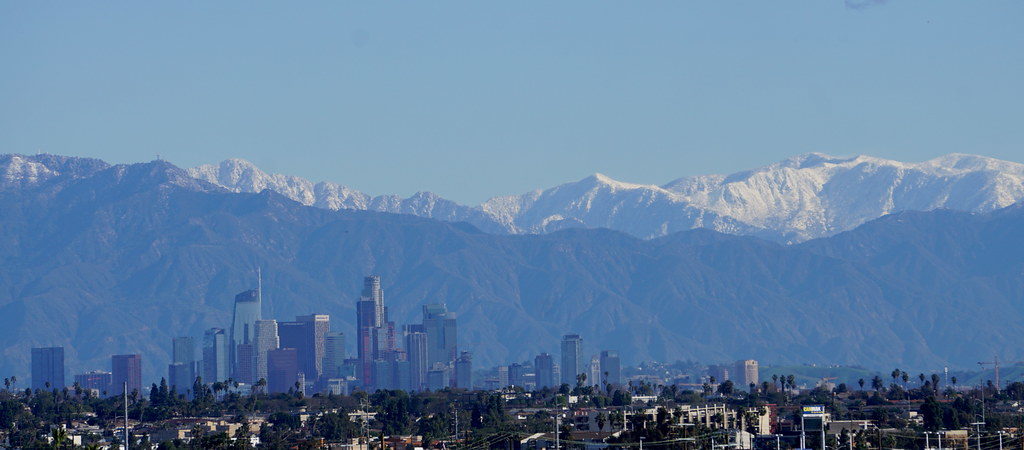
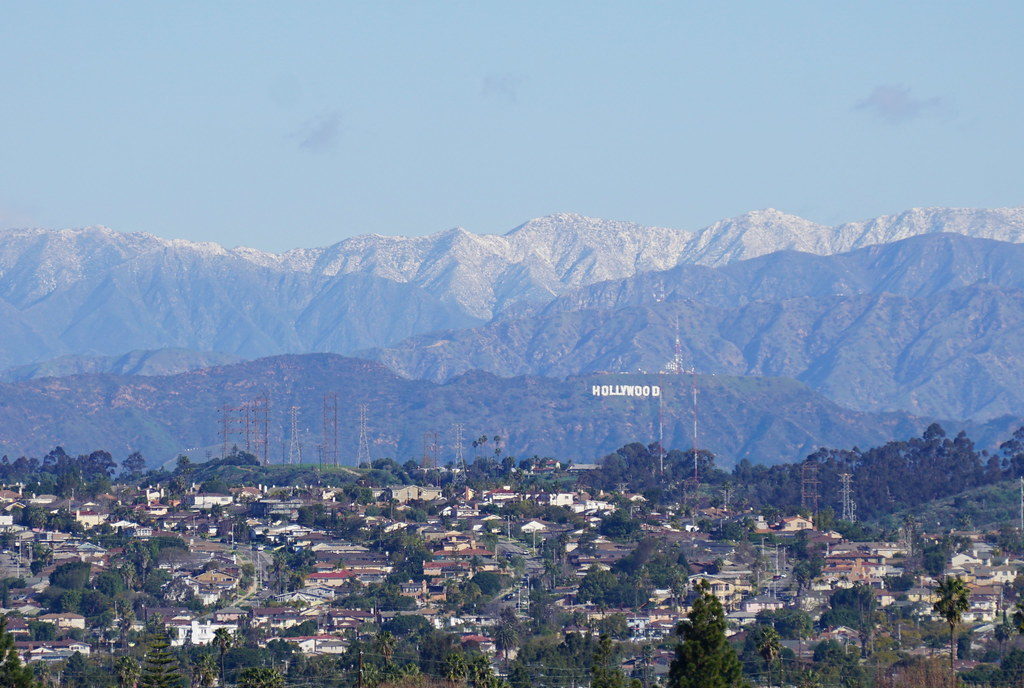
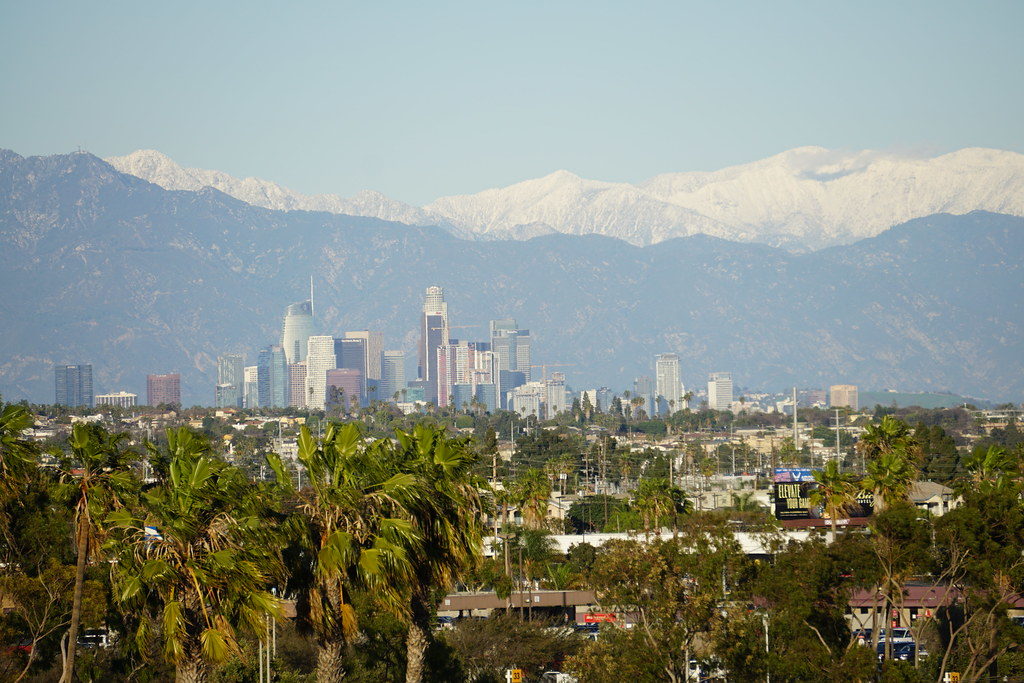
The winter storm of the past few days is over, leaving a thick coat of snow on the higher parts of the San Gabriel Mountains and a thin dusting on the lower parts, even the mountains behind the Hollywood Hills, still lingering though mid-morning.

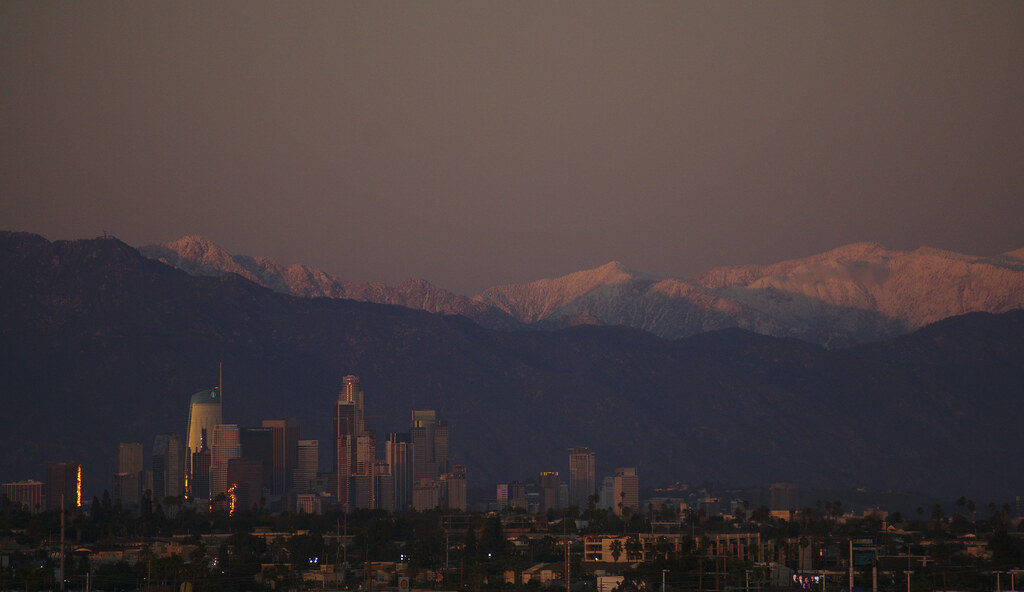
By mid-afternoon, most of the snow in the second photo appeared to have melted, and the patches on Mt. Wilson (barely visible to the left in the first and third images) had mostly faded. The next ridge back was still thoroughly covered, though!

I left work just before sunset, to make sure I could get some photos of the reddish light glinting off of the still snow-covered mountains.

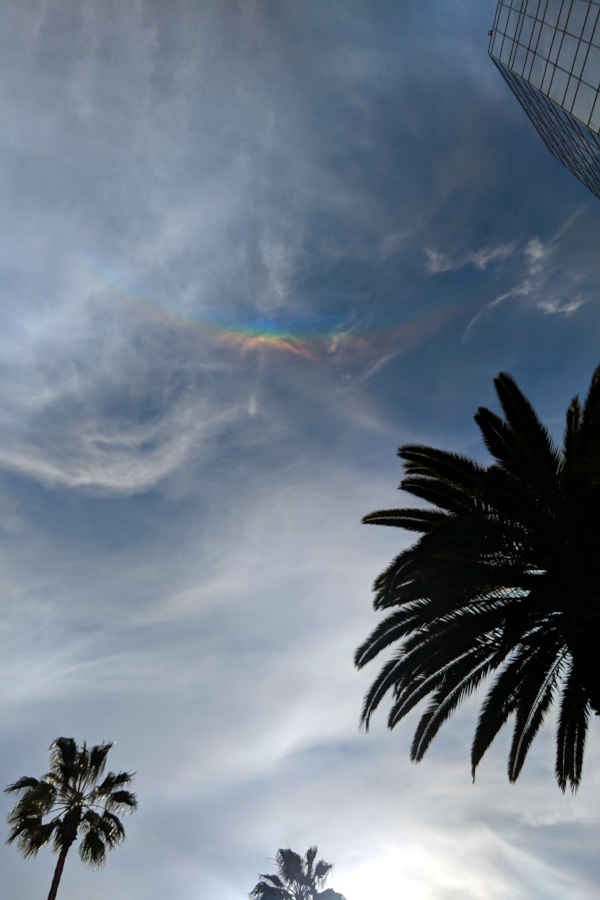
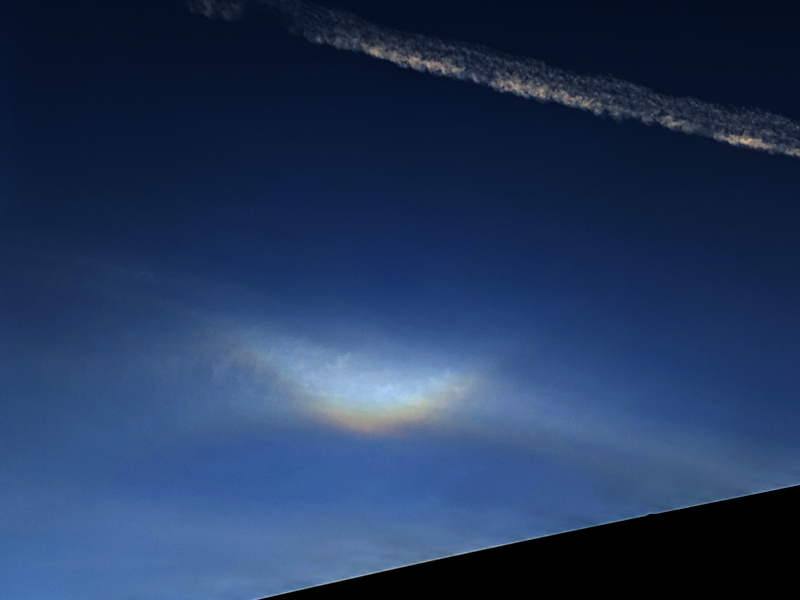
Wispy clouds with an upside-down rainbow near the top of the sky.

The last few weeks have been really good for halos. The first tangent arc I’ve seen, a clear circumscribed halo, the more common sundogs and 22° halos, and now a circumzenith arc, looking like an upside-down rainbow high above the sun, wrapping around the top of the sky.

I think this is the second I’ve seen, but the first was only a fragment.

Like all sun halos, they’re formed by light reflecting through ice crystals. And since those crystals can be in the upper atmosphere, you can see them even in warmer places like Los Angeles.

Taken with my phone through polarized sunglasses. Color and contrast enhanced.

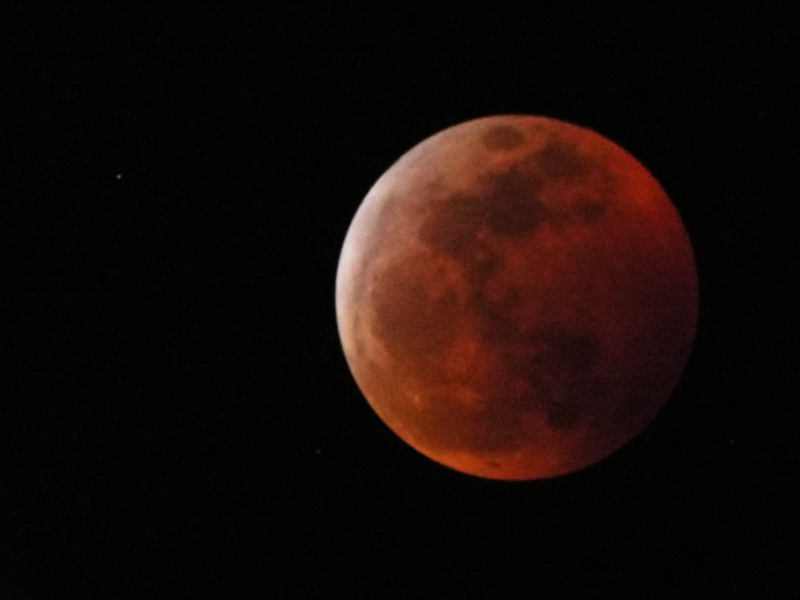
Full moon, mostly red except for a whiter edge at the upper left.

The evening was hectic, and I almost forgot. I had literally just put my son to bed when I remembered, “The eclipse!” We went out to see if the sky was clear.

Clouds were rushing across the sky, but for the most part, it was clear, and we had a perfect view of the moon looking like a dark brown chunk of rock in the sky.

Update: It wasn’t quite this red to the eye, it was more of a deep brown, maybe slightly brick red. Probably a matter of retina sensitivity vs. camera sensors.

(Then I spent 10 minutes fighting with camera settings while he went back to bed.)

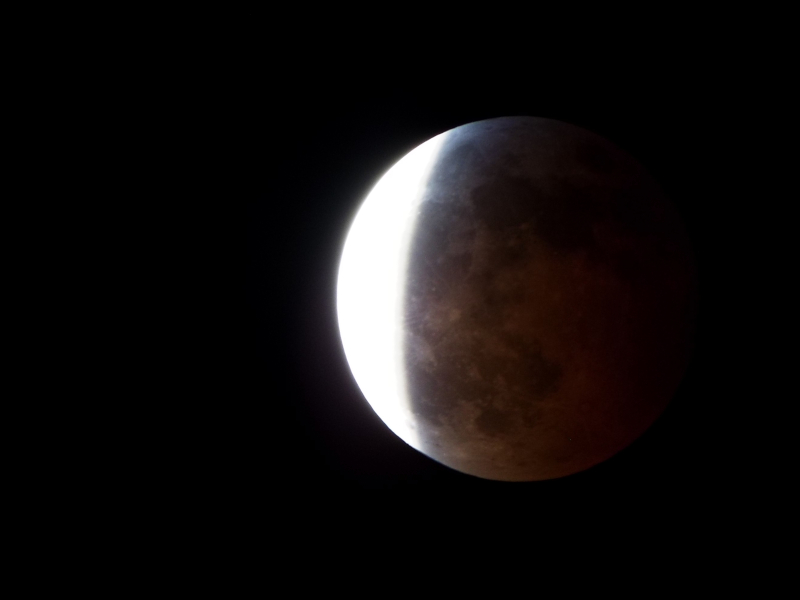
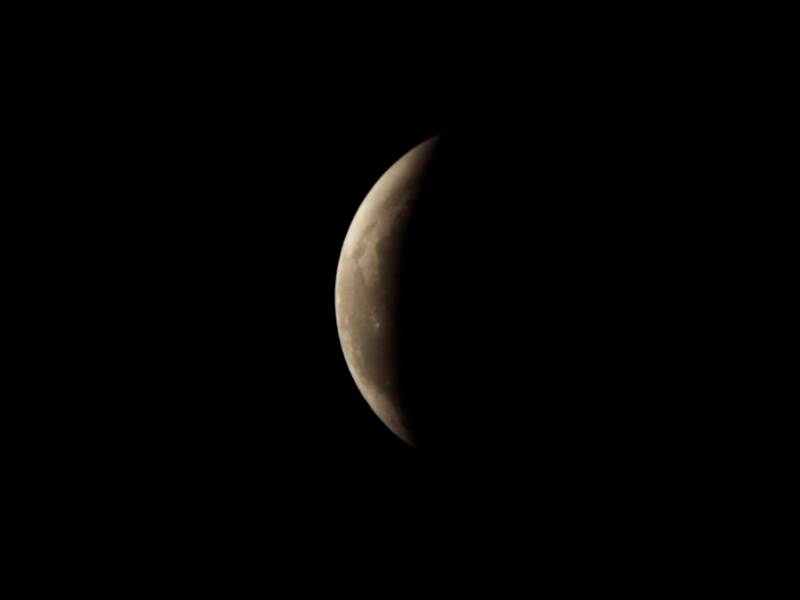
Update: I went back out about an hour later to check out the view as the moon left the earth’s shadow, and caught these two photos, taken about the same time with different exposures so that you can see either the lit portion of the moon, or the part that’s still in the earth’s shadow.

When I first started paying attention to solar ice halos, I read about tangent arcs. But this is the first time I'm sure I've *seen* one.

A diffuse bright V-shaped light in the sky, slightly redder on the lower edge, with a faint arc of light extending downward from the center.

When I first started paying attention to solar ice halos, I read about tangent arcs. But this is the first time I’m sure I’ve seen one. The tangent arcs appear above and below the sun, branching out from the 22° circular halo (which you can see here, very faintly), and change shape depending on how high the sun is in the sky.

It was late afternoon, and the sun was behind the next building over. I ended up snapping a shot with my phone, wishing I could have grabbed a better camera, but the Pixel 2 caught a surprising amount of detail once I adjusted the brightness to bring it out. (No, the sky wasn’t this dark!). It’s a far cry from the G1’s photo of a very blue (and blurry) set of halos 10 years ago, or even the Galaxy S4’s colorless rainbows at sunset four years ago.

»All pages site-wide with this tag