It’s been gloomy all day – the kind of August day that’s hot, humid and still, sapping all your energy because nothing *actually* cools you off except real air conditioning (or standing in front of the refrigerator), not even taking a cold shower in the afternoon. At least the nights are still cooling off, even if the days are muggy.

Close to sunset, the clouds finally started to break up, and I began to think I might get to see tonight’s lunar eclipse after all.
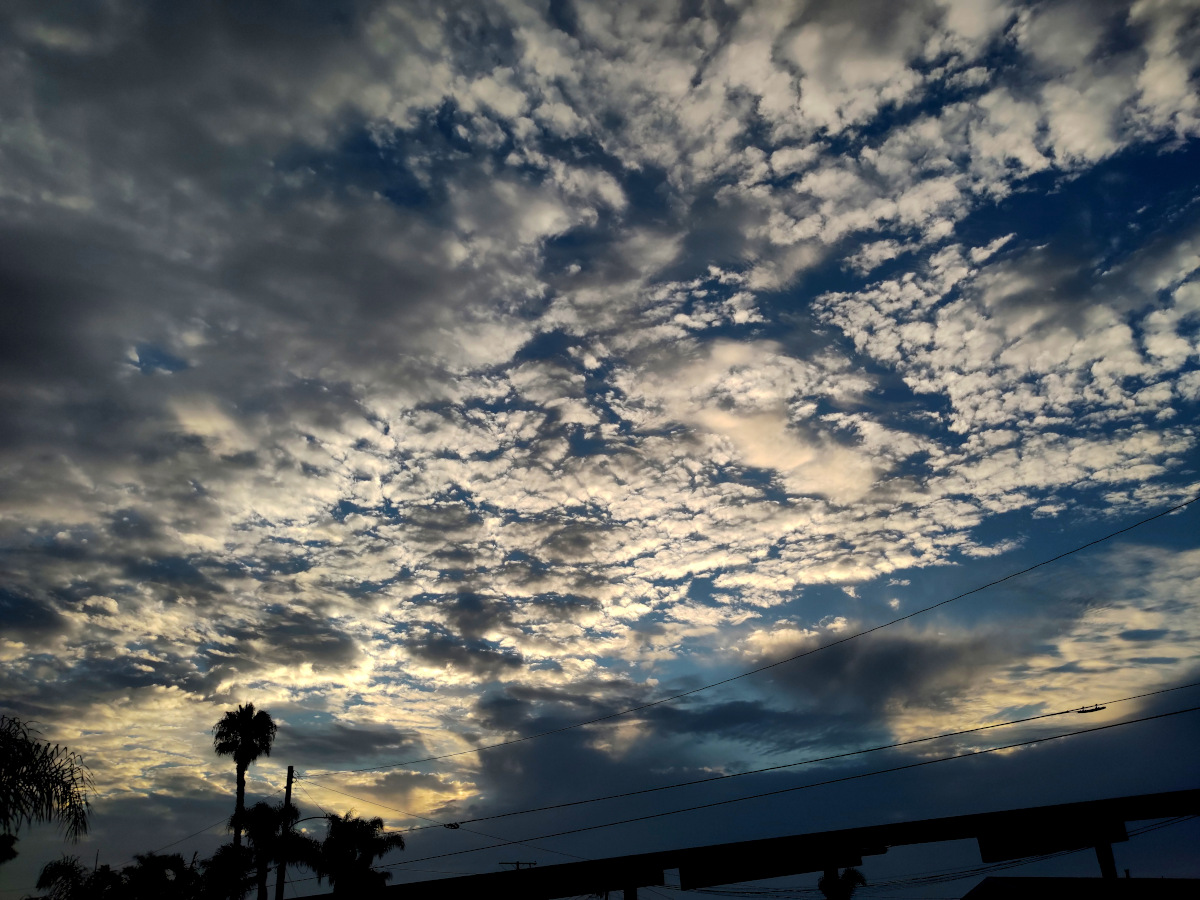
Darkening sky with a bunch of small clouds, lit from behind/below.

That’s looking west. The clouds to the east were still a bit more solid, but low to the horizon, and by the time the moon cleared the rooftops and the eclipse was well underway, the clouds had broken up enough to see!
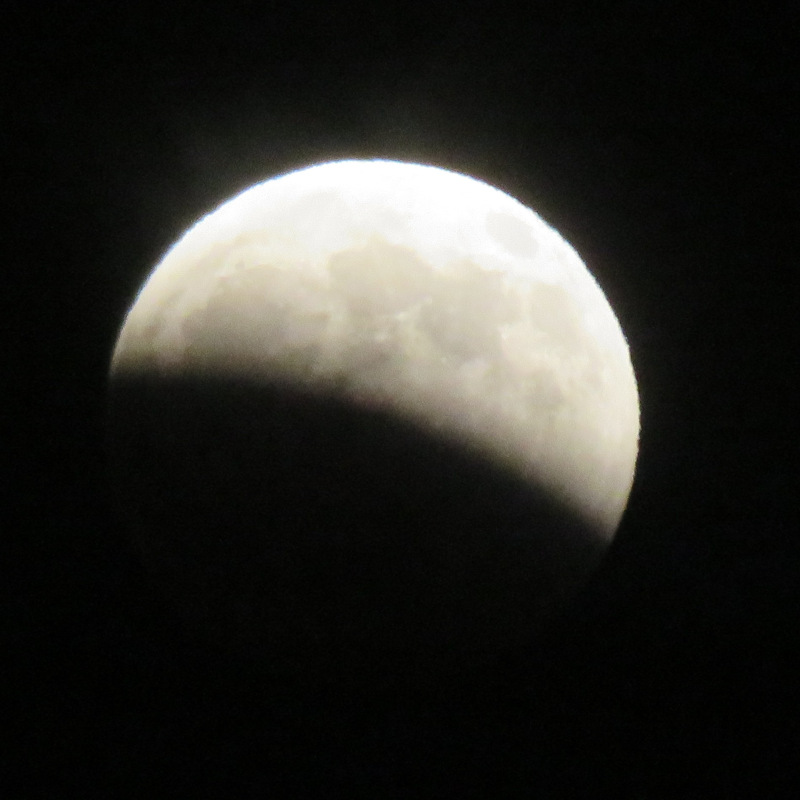
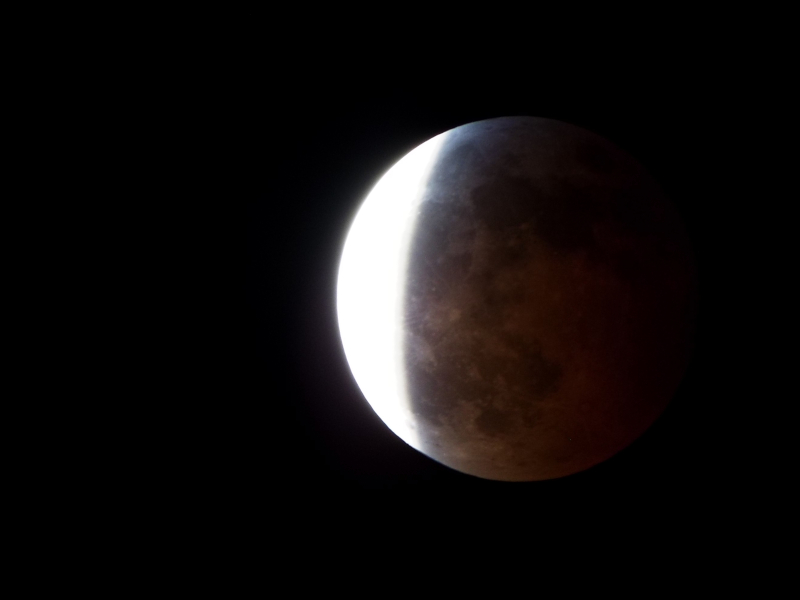
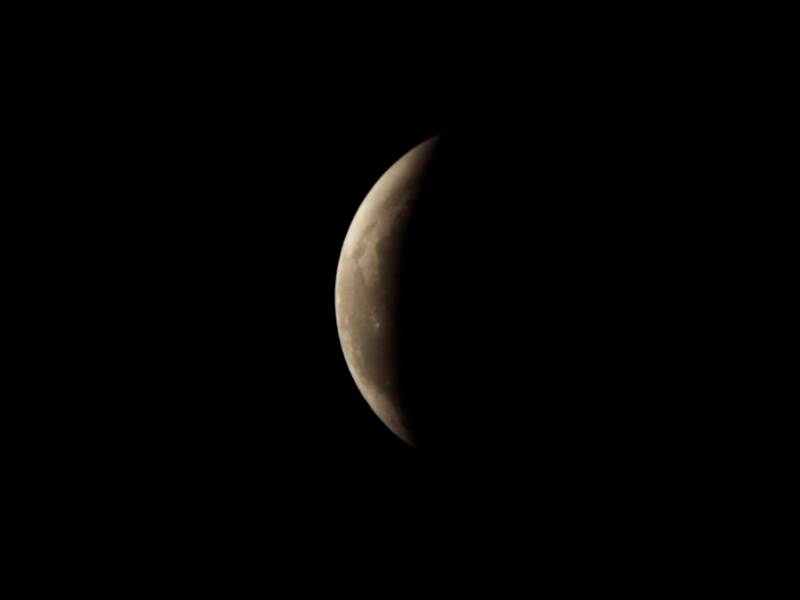
At first glance it looks like a half-moon...but the line between light and shadow is curved the wrong way, its endpoints aren't aligned with the center, and there's none of the texture you'd see along it in a normal moon phase

I took the sunset clouds shot with my Fairphone, which did a lot better than I expected, though I only managed to get misshapen blobs when shooting the moon. It’s been hectic enough that I didn’t try to set up the good camera. The point-and-shoot Canon with real optics does okay with the moon, as you can see here. (The teen’s iPhone, however, was able to get at least a couple of shots where the maria are visible. Not as good as the Canon, but better than any of my phones have managed.)

We went back inside, waited a while, went back outside, took some more photos, talked with the neighbors who were also looking at the moon, went back inside, rinse, repeat. Lunar eclipses are a lot more accessible than solar ones. They’re slower, since the Earth’s shadow is around 3 times the size of the moon at that distance. They’re visible from anywhere with a view of the moon, not just a narrow track. You don’t need eye protection. And unlike solar eclipses, a partial lunar eclipse is almost as cool as a total one. A lot of the time you can just walk out into your front yard.
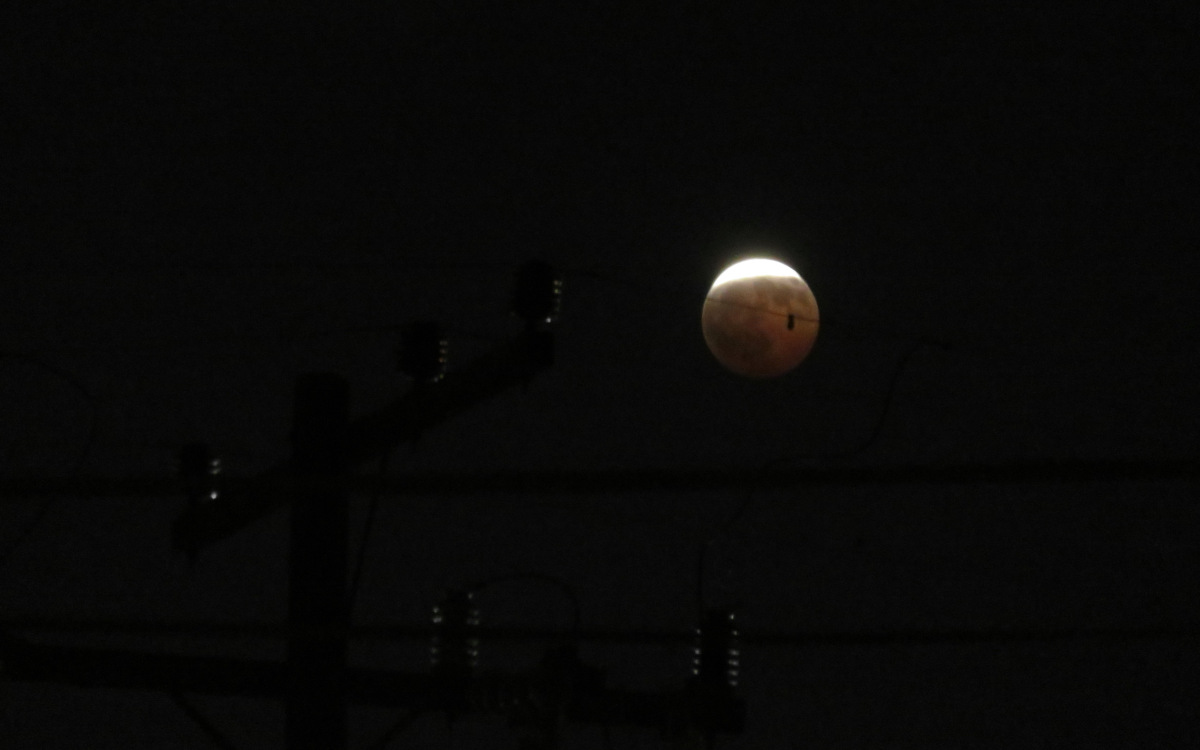
The moon hangs in the black sky above the top of a telephone pole, one wire (and something hanging from it) passing in front of it. Most of the moon is a dim red color, on which the maria are clearly visible. A bright white arc at the top looks like a shallow beanie. The brightness completely washes out any details, and makes the outer edge of the arc bulge outside of the circle.

If you’re reading this close to when I’m posting it, the eclipse isn’t over yet. There’s still an hour or so before the moon completely passes out of Earth’s shadow. If you have clear skies and the moon is up where you are, go take a look!
I can go with your scifi/fantasy story’s super-impossible thing being associated with an eclipse. It’s activating or deactivating people’s super-powers? Sure! Certain magic spells can only be cast during an eclipse? Sure! The moon transforms into cheese? OK, whatever. (pun not intended)

But please, please get the basic mechanics right! Continue reading

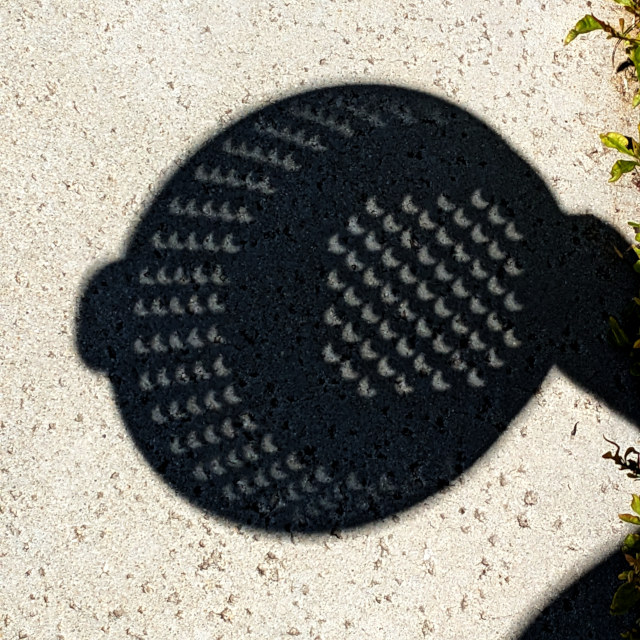
Yes, it turns out a colander *does* make a fun instrument for observing a solar eclipse! Also, thinking about how common eclipses actually are.

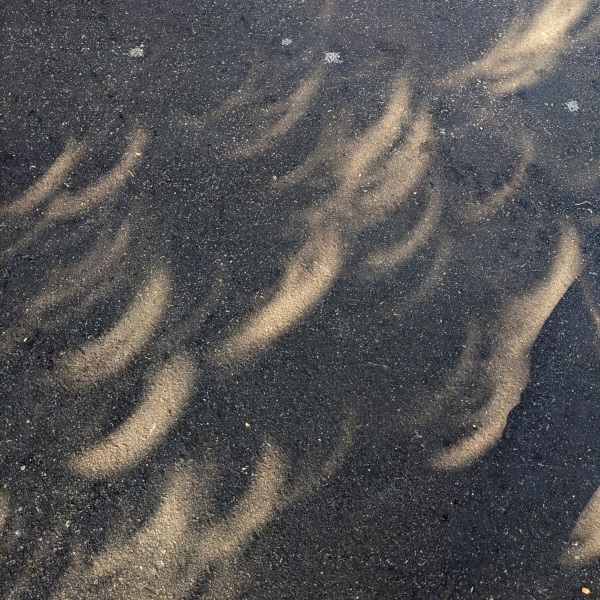
Circular shadow on the sidewalk, with lots of bright crescents inside, all facing the same direction.

For a lot of reasons, we didn’t arrange another road trip to see today’s total eclipse like we did in 2017 (which was amazing, by the way!). It was only partial out here in California, and not even with as high a magnitude as the one last October.

But we had clear skies, so we broke out the eclipse glasses from 2017 again. After testing them first by looking directly as a bright indoor lamp to make sure there were no scratches. And I’d heard that colanders make interesting patterns (each hole works as a pinhole camera) much like overlapping leaves do, so I brought that out — as you can see, it worked quite well!

I do kind of regret not being able to get out to see this one as total. Partial eclipses can be really cool, especially if you have multiple ways to observe them, but XKCD has a point. There really isn’t any comparison to experiencing totality, and it doesn’t come through very well in photos.

I bet northern Spain is already booked for 2026.

It is interesting to think that solar eclipses happen every year — usually twice! — but they’re not always total, and they’re only visible from a small part of the planet at a time. And sometimes that’s a slice of, say, Antarctica or Siberia or out in the middle of the ocean. Not rare for the planet, but definitely rare for any given location.

On one hand, it’s no wonder people used to see them as omens. With travel and communication slow (and in many cases impossible) in the ancient world, if you’re only going on what’s been seen in your area, it seems super-rare and unpredictable. On the other hand, cultures with sophisticated enough astronomy like the ancient Babylonians were able to calculate the eclipse cycle thousands of years ago!

One bit of funny timing: We’ve been catching up on the last season of The Magicians. Today we got up to an episode that…well, let’s just say the moon figures very prominently in it!

Update: Axios posted a nice map last week showing how fully booked AirBnBs are for the day in different parts of the US…which shows the path of totality *very* clearly!

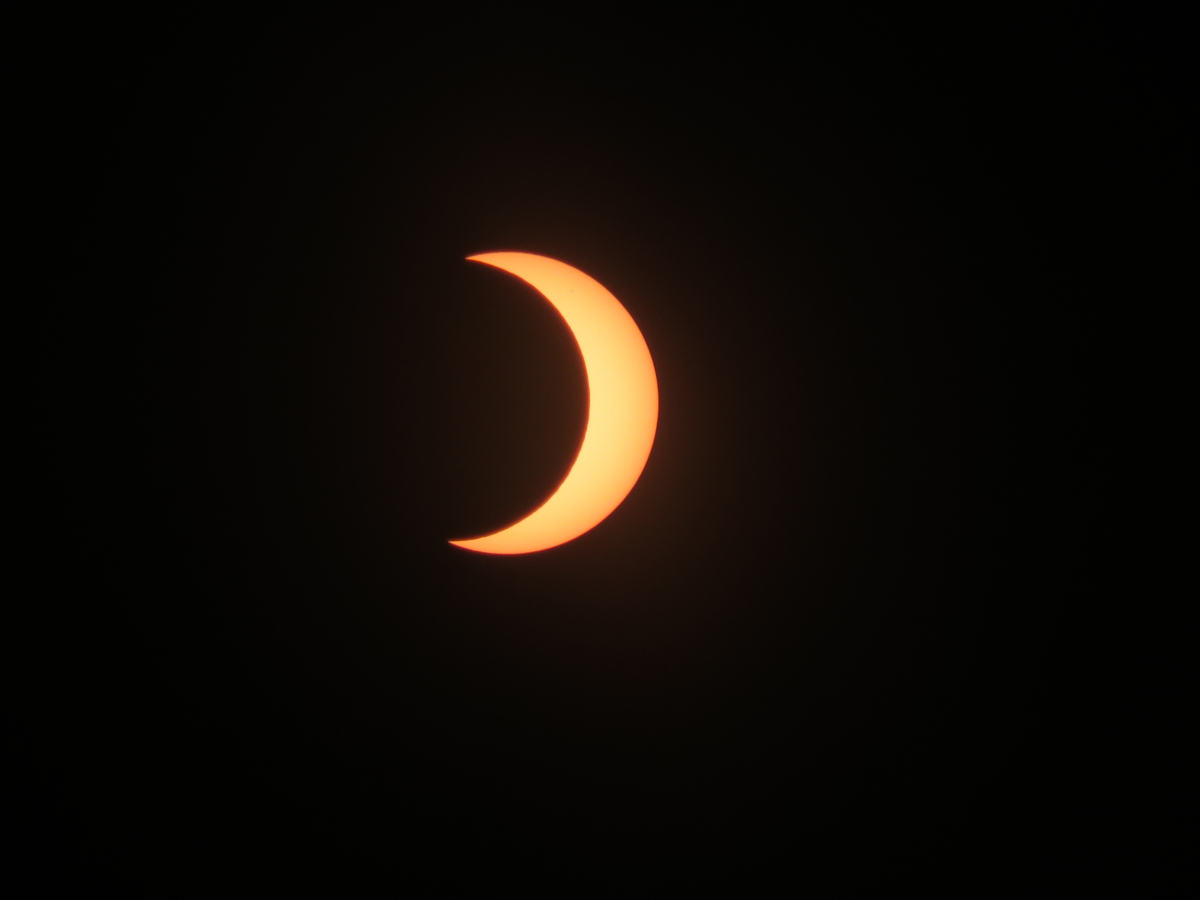
It was hazy, and the weather forecast was partly cloudy, but the sun stayed visible and the eclipse glasses (used here for the photo) haven’t cracked!

Yellow-orange circle on a black background, with a circular chunk apparently cut out of it.

We didn’t do anything complicated this time: just took the glasses with us as we went about our morning, looking through the glasses every 15-20 minutes to see how much was covered until it reached its maximum coverage of 78% of the sun’s apparent diameter.

And at projections. Leaves are nature’s original pinhole camera!

A bunch of overlapping bright crescents of light on the ground.

A road trip like 2017 to see the full annular eclipse would have been cool, but it just wasn’t something we could do this time around, and with clear visibility, there wasn’t any need to seek higher ground like 2012.

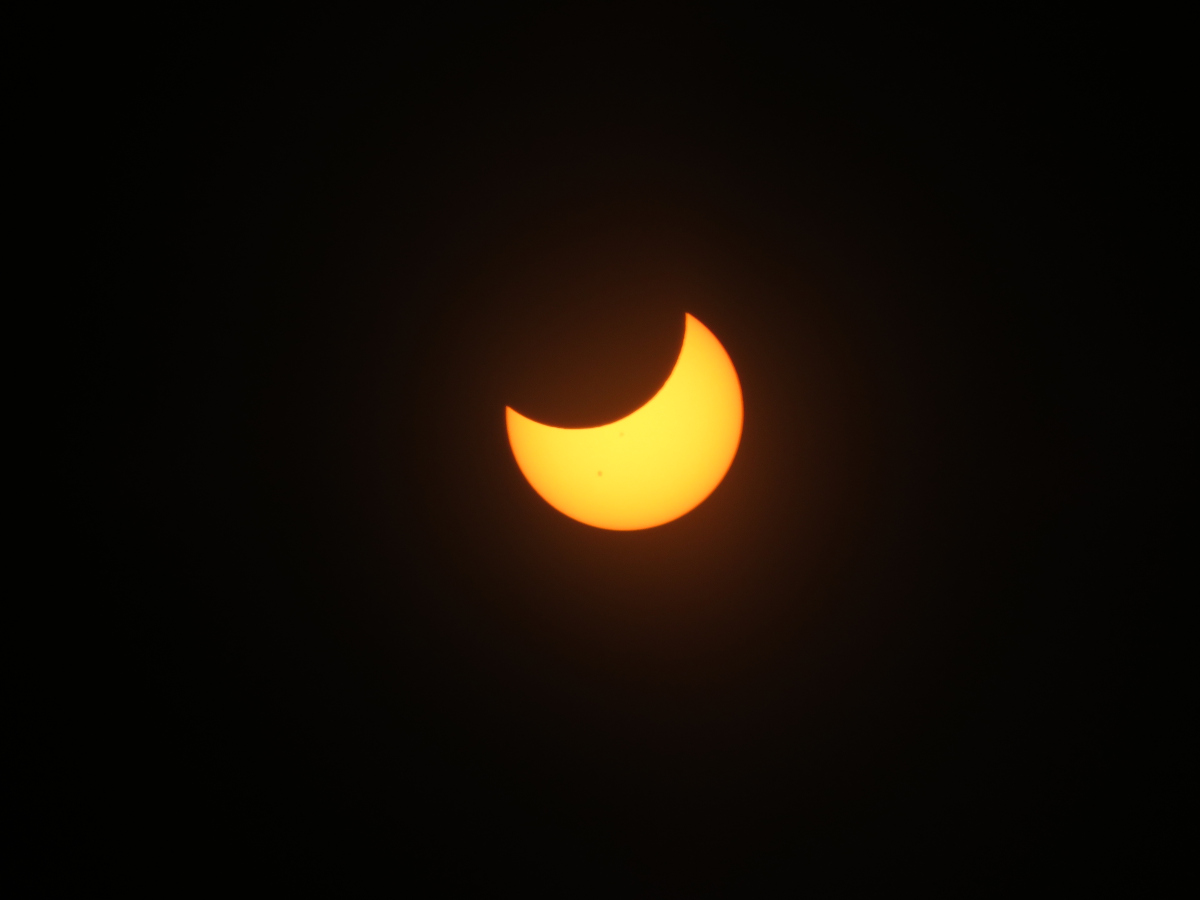
Here’s peak coverage for this area, again viewed through eclipse glasses.

Yellow-orange crescent on a black background.

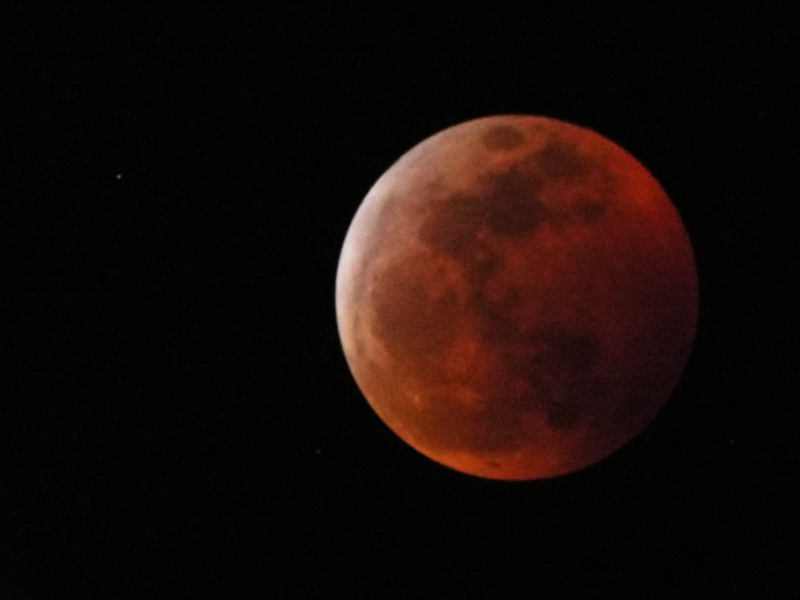
Full moon, mostly red except for a whiter edge at the upper left.

The evening was hectic, and I almost forgot. I had literally just put my son to bed when I remembered, “The eclipse!” We went out to see if the sky was clear.

Clouds were rushing across the sky, but for the most part, it was clear, and we had a perfect view of the moon looking like a dark brown chunk of rock in the sky.

Update: It wasn’t quite this red to the eye, it was more of a deep brown, maybe slightly brick red. Probably a matter of retina sensitivity vs. camera sensors.

(Then I spent 10 minutes fighting with camera settings while he went back to bed.)

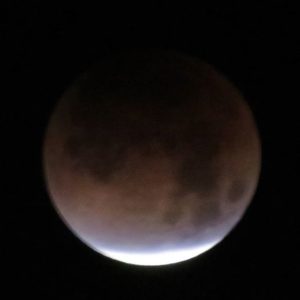
Update: I went back out about an hour later to check out the view as the moon left the earth’s shadow, and caught these two photos, taken about the same time with different exposures so that you can see either the lit portion of the moon, or the part that’s still in the earth’s shadow.

I woke up way too early to see if the Super Blue Blood Moon* eclipse would be visible or blocked by clouds. (You never know, and I didn’t want to wake up the kiddo in the middle of a school night if there wasn’t anything to see.) I had a clear view, but the street lights were too bright to see the red color. It just looked dull brown.

So I took a couple of pictures, then went back in to wake up the kid. He still wanted to go out and see, but only for one look. Totally understandable. I carried him out, we looked at the darkened moon, then I carried him back in and put him back to bed.

It’s the third lunar eclipse he’s seen, though one of them we didn’t get to see much of since it was so cloudy. And while it’s not as cool as a total solar eclipse, it’s something you can see with no special equipment by walking out into your front yard anywhere in the world that has a view of the moon during the several hours it takes the Earth’s shadow to move across it.

I went back out one last time to try for some photos of totality, but they didn’t come out any better than the ones I took the first time. I looked around for a spot that might be darker and still have a view of the moon (without trespassing in someone else’s back yard), but didn’t see one — there are way too many lights at night these days. Then I tried to place the constellations I could see, and failed. Then I went back in to go back to bed.

Unfortunately I don’t think I really got back to sleep, so I’ve been dragging all morning. The interruption didn’t help the kiddo either, so getting him to school was a bit of a challenge.

*Blood moon: lunar eclipse, Earth’s shadow darkening the moon & turning it red. Cool to see, widely visible.
Super moon: full moon during closest point in orbit, looks slightly bigger.
Blue moon: 2nd full moon in a calendar month, otherwise no difference.

I’ve always wanted to see a total solar eclipse, but until now I never had the opportunity. I’ve caught a number of partial solar eclipses over the years, and quite a few lunar eclipses. This year’s “Great American Eclipse” was perfect: it passed close to Portland, where we have family, and we could visit friends on the way up.

By the time I reserved our hotel there was nothing left inside the path of totality, but we could still get an expensive room in Portland. I reserved that immediately for the nights before and after, then a motel for a few nights before so we would have time to visit, then we planned out the trip up and back.

Driving Into the Path

The morning of August 21, we got up at 5:30 to drive south into the path of the eclipse. We didn’t actually make it out the door until at least 6:30, and the parking attendant had lost our key (fortunately we had two, and they did eventually find it that afternoon), and then we got lost trying to find an ATM in case we had to pay a ton to park in someone’s field (one way streets and bridges and driving into the early morning sun), but we got on the road toward Salem by around 7:15/7:30, with our eclipse glasses, water, snacks/emergency food, and a very sleepy 6½ year old.

The threatened traffic jam carpocalypse didn’t materialize. There were slowdowns, sure, but nothing we hadn’t experienced on the way out of LA. Our nav system (which J. calls the “map lady”) sent us onto a side road at one point, and we drove through the countryside a while before getting back onto the interstate.

Continue reading

»All pages site-wide with this tag