
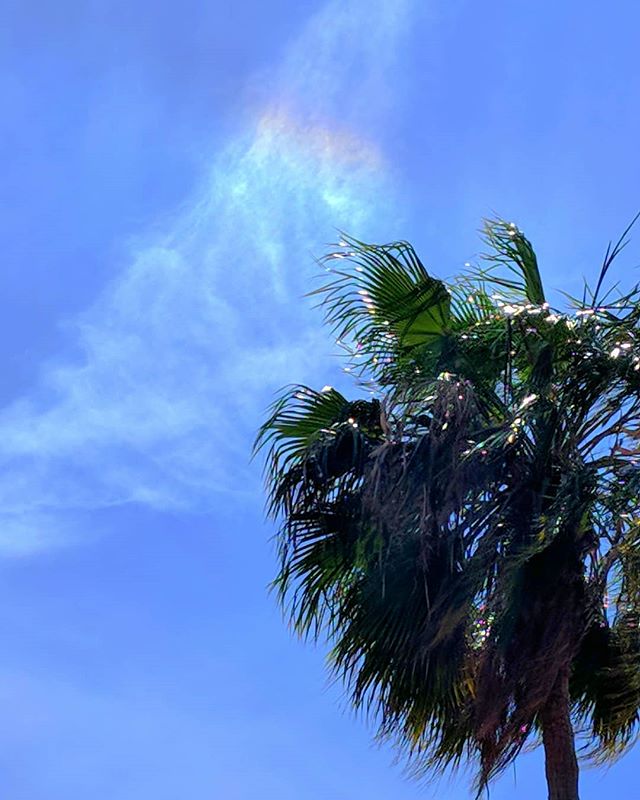
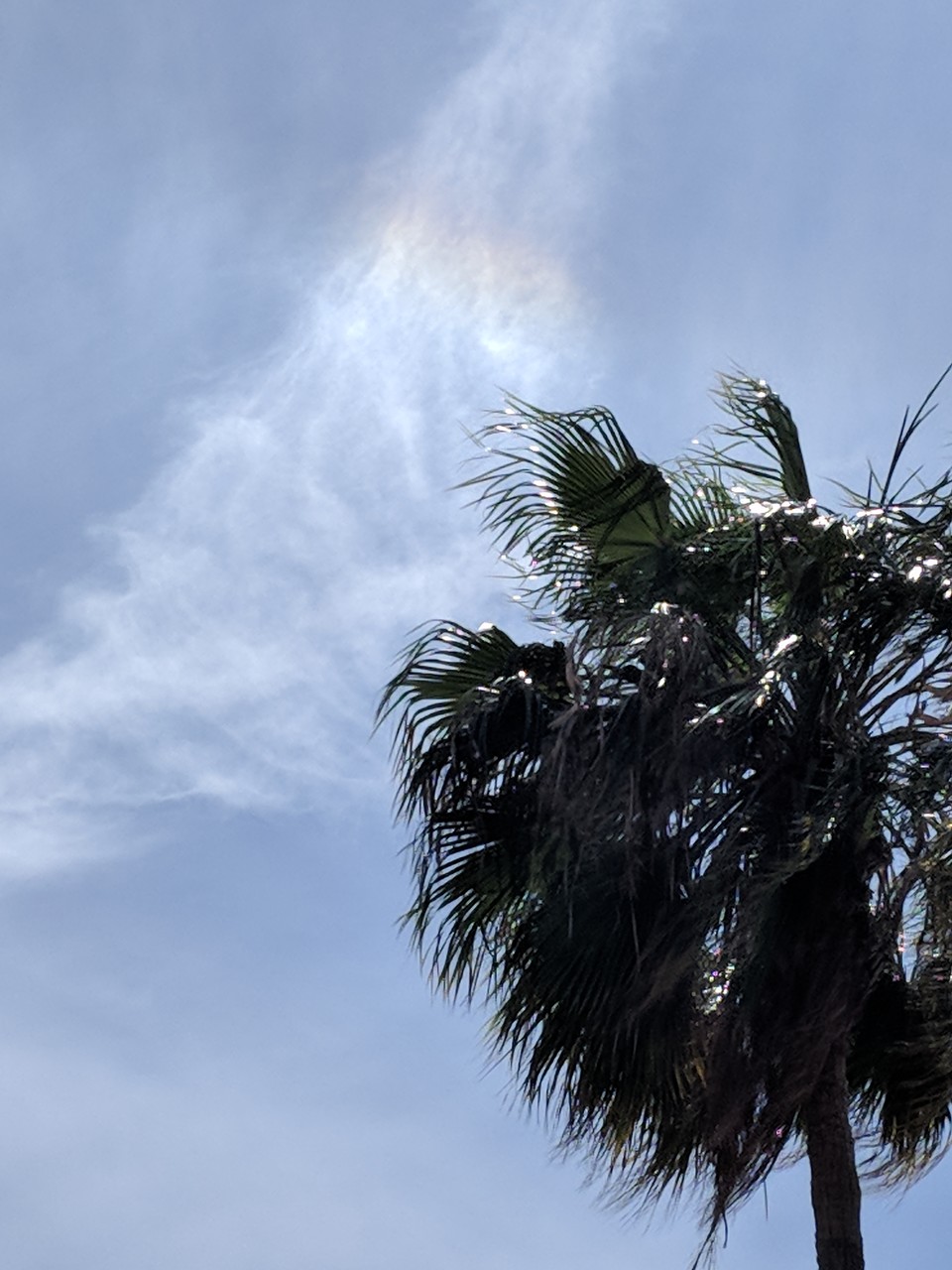
Wispy sundog fragment (colors enhanced). The colors were really easy to see through my polarized sunglasses, but just faded into the glare without them. My phone barely caught it, but the info was there once I stretched the saturation.
Wispy sundog fragment (colors enhanced). The colors were really easy to see through my polarized sunglasses, but just faded into the glare without them. My phone barely caught it, but the info was there once I stretched the saturation.
Most social networks don’t give you the ability to backdate your posts. That’s good, because it provides a trail that you can point to, saying “Yes, I did in fact post this before it became common knowledge/was plagiarized/etc.” But other publishing platforms do. It’s helpful for things like transferring an archive from another site — though it seems a little weird (and vaguely dishonest) to backdate a new post.
That said, I do backdate posts on this blog from time to time, generally when:
There’s also the accidental backdating that sometimes happens when I create a draft in the mobile app and it decides to keep the upload date as the posting date. I try to fix these as soon as I notice. But that’s not really the same thing!
Silly as it sounds to recall nuts for undeclared nuts, not all nuts are the same.
If you’re allergic to cashews but not pecans, you want to know whether the pecans you might eat have come in contact with cashews. And that’s not even getting into the peanut/tree nut difference!
In this case [Edit: link broken], a process breakdown at a roaster opened up everything to cross-contamination by every other kind of nut they sell. They’re recalling affected lots while they fix the problem.
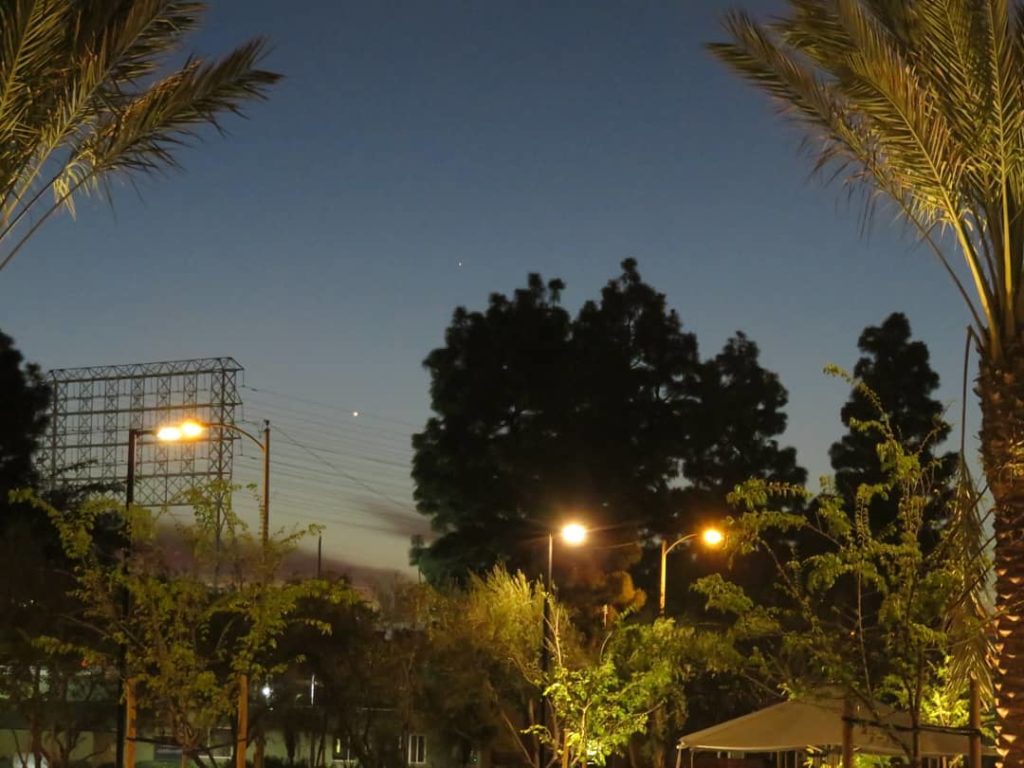
They’re not as close as they were two nights ago, but I managed to frame them with a more interesting foreground.
I’ve known about portrait distance for a while, and often thought that was a downside of using fixed-lens phone cameras for portraits. To frame someone’s face in a phone you have to either zoom (losing detail) or hold it close enough that the viewing angles distort the face. I prefer using my phone for long shots and using a camera with an optical zoom for portraits.
Unexpected consequence: Selfies are now a major source of young people’s self-image…which is distorted, leading them to feel worse about themselves and even seek out plastic surgery.
The researchers looked specifically at selfies taken from 12 inches away — a common distance for someone snapping a selfie without the assistance of a selfie stick. In a selfie taken from that distance, men’s noses appear 30 percent wider and women’s noses appear 29 percent wider than they actually are.
I think we can all agree that selfie sticks are a lesser evil than unnecessary cosmetic surgery!
Update: From the Facebook comments, here’s a link to a series of portraits taken at distances ranging from 2 meters down to 20 cm, demonstrating how different your face looks at each distance.
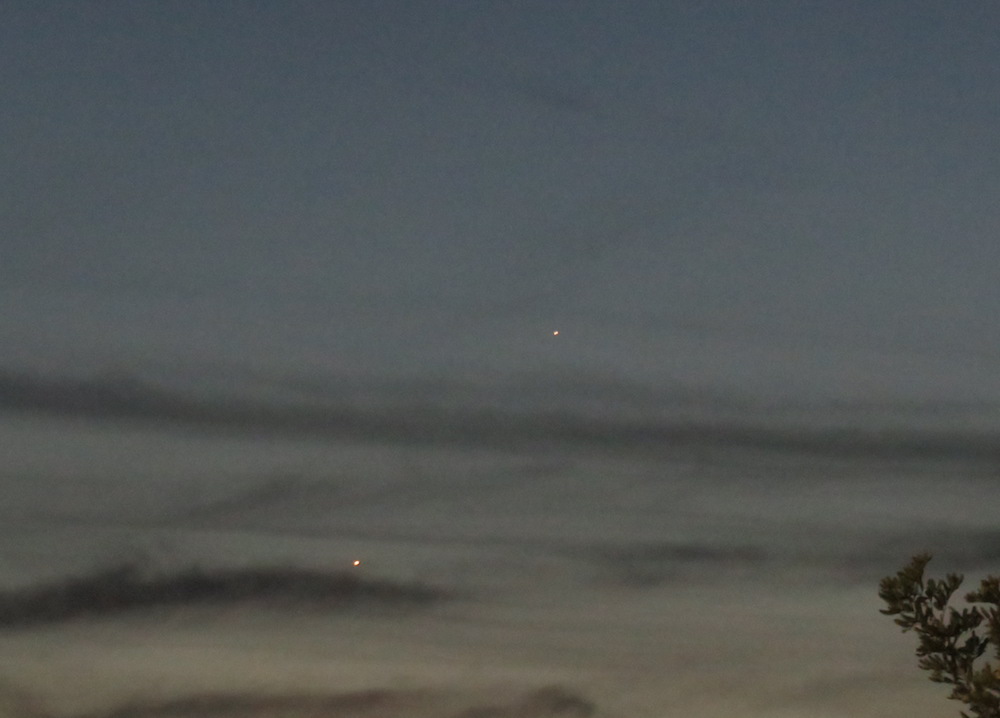
Venus and Mercury close together after last night’s sunset.
I lucked out in that…
As it is, I still had to crop out a street light and its lens flare to get this photo, or I would have framed it better.
But hey, it’s not often you get to see Mercury from a city at all, never mind right next to another planet!
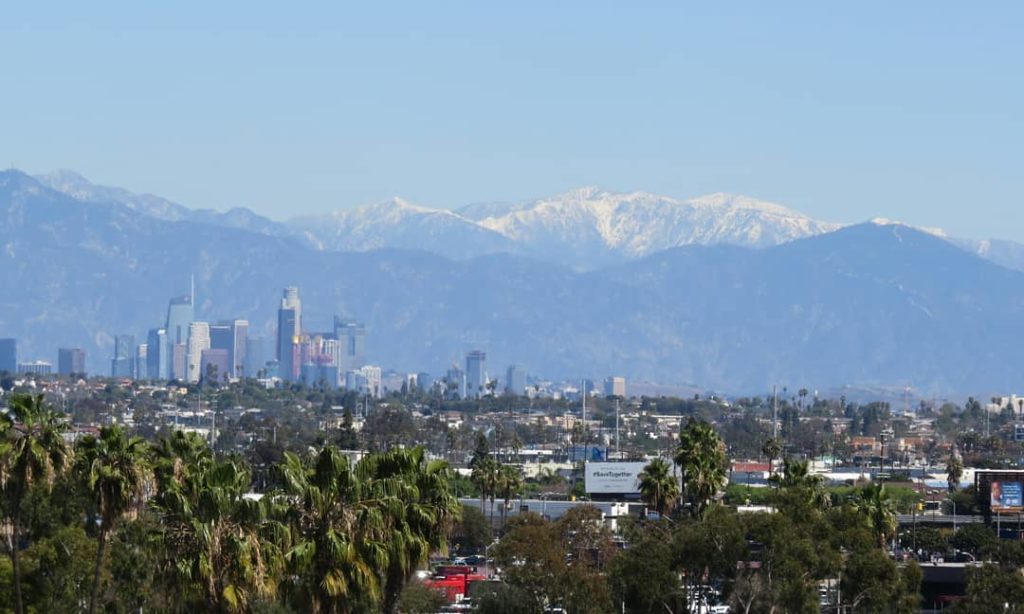
From yesterday: the first significant snow in the mountains above Los Angeles this winter, courtesy of last week’s storm.
Unfortunately, it’s almost spring. The weather has already warmed up again. Last week I was wearing sweaters and a medium jacket. Today I’m back to short sleeves, and I had to put the jacket away on my lunchtime walk.
And there’s not much of that snow left today.
KQED has some great photos of snow in the Sierra Nevadas after the same storm. That’s more important, as California depends more on the Sierra snowpack for water during the summer.
They’re expecting another storm to come through next weekend. I guess we’ll see how much snow we get. And how long it sticks around.