
Ordered tickets to see Vienna Teng! Amazing how Ticketmaster can turn two $15 tickets into a total of $50.
Associated Press sends nastygram to their own affiliate for using AP’s official YouTube channel. (via @ThisIsTrue)
Ordered tickets to see Vienna Teng! Amazing how Ticketmaster can turn two $15 tickets into a total of $50.
Associated Press sends nastygram to their own affiliate for using AP’s official YouTube channel. (via @ThisIsTrue)
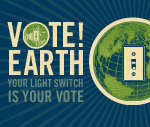 Tomorrow night (March 28) is “Earth Hour” — a campaign to raise awareness of global warming by turning off your lights for one hour, from 8:30-9:00 PM local time.
It’s an interesting idea, but a weird one. For one thing, global warming seems an odd fit. Yeah, there’s a connection, but it seems more directly tied to pollution and simple conservation of finite resources. For another, it really reminds me of those campaigns to protest gasoline prices by not buying gas on a particular day, without changing your driving habits.
Then there’s the fact that it’s presented as a “global election between Earth and global warming.” Not only is this silly, it’s also the kind of black-and-white with-us-or-against us thinking that just polarizes people — and indeed there are a bunch of jackasses running around shouting about how they’re going to turn on every single light in their house during that hour just to piss off the “treehuggers.” (Apparently these people have money to burn even in this economy, and enjoy breathing smog.)
And of course, there’s the question of what to do with that hour.
Does it count if you leave the house? Chances are you’d be turning the lights off anyway.
How about non-electric lighting? A candlelit dinner, perhaps? You’re still consuming resources to produce light. A flashlight would have the same problem: you’re using power that was put into a battery.
So that cuts out things like reading, or playing cards, or board games.
TVs and computer monitors produce light. Music players use electricity. A stove uses either electricity or gas. If you turn off the lights and turn on the TV, that’s not really much of a savings, is it?
So really, you have one hour at home in the dark, at an hour earlier than you’re likely to sleep, and you can’t use anything with light or electricity. That really cuts back on available activities. You’re pretty much down to conversation. Maybe stargazing. A few other things that don’t require light.
Actually, I guess it would be an interesting experiment/reminder of what night is like without artificial lighting — sort of a voluntary power outage without candles and flashlights.
The more lasting impact will be to simply not waste energy. Turn off lights when you’re not using them. Turn off your computer when you’re not using it (or at least put it to sleep). Unplug appliances that have standby modes when you’re out of town. Don’t run your heater or air conditioner when you’re not home, unless you’ve got it on a timer to get the place ready for when you arrive.
You’ll save money on your electric bill. The power company will use less fuel. They’ll pump out less pollution, and reserves will last longer. Everyone wins.
(Found while surfing Blogexplosion.)
Hmm. I’ve used internet cafes while travelling, but have no idea wher to find one w/in 20mi of home. WiFi hotspots, OTOH, are everywhere.
Political geekery; saw a bumper sticker reading </bush>. Only prob: tag should be <president name="bush">. Did I mention geekery?
Ugh. How does seeking to nullify 18000 marriages fall under “protecting marriage?” How long before a bunch of fundamentalists decide that straight marriages without kids are anti-family and seeks to nullify ours?
A few years back, some sort of registration snafu* left my name off the rolls at my polling place and I had to cast a provisional ballot. I remember being extremely unhappy that night when everyone declared the winner and I knew for a fact that my vote had not been counted. Sure, it would be eventually, but it felt like my vote didn’t matter.
Yesterday, I read that as many as 3 million mail-in and provisional ballots might remain to be counted in California. This morning, that estimate’s been revised to 1.6 million [edit: the official count is coming in at at least 2.3 million; see below]. There are a number of races, including Proposition 11, that are too close to call with that many votes still in play. It’s at least 3 times the current margin of victory for Prop 8 or margin of defeat for Prop 4. If those voters lean heavily one way or the other, it could flip the results once the final score is tallied. (It’s not likely, but it’s certainly possible.)
One thing that hasn’t been clear from the various articles I’ve read is which ballots are left, and when are they counted. Fortunately, the CA Secretary of State has a page that explains exactly that.
This is all handled at the county level, which is why the state office doesn’t have solid numbers yet (there’s a PDF report they’ll be updating as data comes in, but all the numbers are still blank [Edit: as of Thursday evening, numbers for about 2/3 of counties are in, and they total about 2.3 million]), and they have 28 days to finish the task. I’m sure that’s a holdover from the days when it would really take that long to count everything. I imagine it won’t take nearly that long to sign off on the results.
So the lesson is this: If you want your vote counted in the first wave of votes that everyone sees, you must either:
*I never did find out what caused it, but my best guess is that after I moved, my registration got lost in the mail and I was left on the rolls at my old precinct.