We caught the final Harry Potter movie on Sunday. It was an impressive finale to the series, and they clearly made the right decision in splitting the last book across two movies so they could actually put some weight behind the story instead of just running down the bullet points. That was one of the problems I had with the fifth and sixth films

Still, I’m most impressed that the movies finished, and didn’t stop partway through the series with dwindling budgets and audience interest. His Dark Materials couldn’t get past the first film, and based on the box office, it’s pretty clear that the current Narnia films aren’t going to continue beyond Voyage of the Dawn Treader.

Eight movies over a decade, adapting a complete series, and going out with a bang? That’s an impressive feat right there!

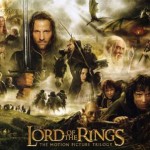
Today, I watched Green Lantern at the same theater where we’ve been watching a series of special screenings of the extended-edition Lord of the Rings movies. Afterward, thinking about the two ring-focused stories and the in-progress event comic book Flashpoint, I found myself imagining: What would The Lord of the Rings have been like as a modern “event” comic book like Final Crisis or Blackest Night?

No doubt it would have tie-ins, side stories, spinoffs, and a bunch of extra tie-ins added to plug the inevitable gaps in the schedule. Check out my full list at Speed Force!

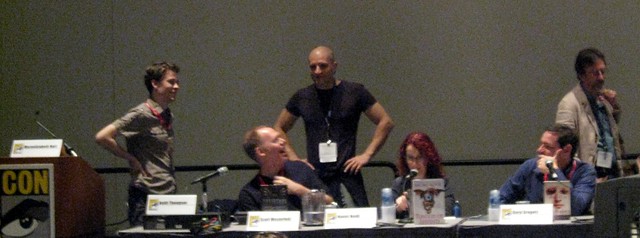
One of the panels I hit on Thursday was called “Twisting Genres,” and brought in a bunch of authors who had all written books that mixed and matched traditional genres. (western and horror, historical fiction and dragons, etc.) It was essentially the same topic as the “Blurring the Lines of Genre” discussion I saw at Westercon, but with a completely different set of authors who stayed a bit more on-topic (possibly because they had a moderator).

Of course, just because they stayed on topic doesn’t mean they weren’t funny.
Quotes

“Where do you shelve that?” Maryelizabeth Hart on the impact of mixed-genre novels on bookstores.

“I’m part-Australian, and required by law to put Australian content in my book. It was either that or the Sydney Opera House.” — Scott Westerfeld, explaining the presence of a Tasmanian Tiger in the Leviathan Trilogy.

“You have these ideas in your head and they start having sex with each other, and these strange webbed babies come out…” — Daryl Gregory(?) on how genre mash-ups are born.

“Awesome plus awesome does not always equal two awesome. Sometimes it’s an abomination, like a Reese’s Peanut Butter Cup.” — China Miéville, a few minutes after Naomi Novik cited them as an example of how mixing things does work.

“It’s Dinosaur Love Story!” China Miéville on the classic Hollywood “X+Y” pitch.

Stories

Something that came up at both this panel and the Westercon discussion was that mainstream literature is a genre in itself, with its own sets of rules and expectations. I think it was China Miéville who described it as a genre with a successful thirty-year marketing campaign to convince people that it isn’t a genre.

Justin Cronin explained that he crossed over from mainstream literature when his nine-year-old daughter was terribly concerned that his other books might be boring, so he launched a project with just one rule: it must be interesting. He eventually submitted The Passage under a pseudonym so that his name wouldn’t set up the wrong expectations.

Robert Masello said he once had an editor try to “help” him by explaining that they could take the supernatural elements out of his story and it would work just fine… (Ouch.)

One author had a friend who had written a serious novel with the word “Spices” in the title, and got on a radio show to promote it. The host hadn’t read it, and introduced it as a cookbook. So he spent the next half hour giving out recipes. “Why didn’t you correct him?” “It’ll sell more as a cookbook.”

The question was asked whether there are any two genres that are inherently disastrous. Naomi Novik suggested that no two genres were automatically so. China Miévelle said that his brain immediately responded to that question by trying to think of ridiculous combinations…and then figure out how to write a brilliant book with them.

But yeah, a driver’s manual with an unreliable narrator is probably a bad idea.

»Full index of Comic-Con posts and photos.

Quotes from “Once Upon a Time,” a panel at Comic-Con International in which fantasy authors discussed whether epic fantasy requires larger than life heroes.

Brandon Sanderson: “I would say, if Tolkien did it, it’s okay.”

Christopher Paolini: “I write…Mary Sues, and that’s okay.”

Maryelizabeth Hart: “We’re gonna start with Patrick [Rothfuss] so he can’t argue with anyone.”
(later)
Patrick Rothfuss: “I just wanted the opportunity to disagree with myself.”

Megan Whalen Turner on the typical vagueness of prophecies: “What if there was a prophecy that said, ‘The One will come. And he will have a 63% chance of defeating…”

Brent Weeks on the X saves Y structure: “I mean, is there…nobody saves nobody?”
Megan Whalen Turner: “They all die.”
Brent Weeks: “And that’s George Martin.”

Panel held Thursday, July 22, 2010.

»Full index of Comic-Con posts and photos.
I finally made it to a Westercon! It’s been years since I’ve been to a general science-fiction/fantasy convention. The last one was WorldCon/LACon IV in 2006, but I was distracted by a summer cold and lots of DayQuil. Before that was the last Loscon I attended in 2002. So while I remembered how this sort of event is usually run, I wasn’t sure what to expect.

A Bit of Background

Westercon is a fan-run convention that travels around the western United States and Canada, similar to WorldCon on a smaller scale. It’s usually held during the Fourth of July weekend. This year it was held in Pasadena, California, and combined with the filk convention ConChord 23 to form WesterChord, Westerconchord, or simply Confirmation.

I’ve been to a couple of Westercons, but not anything you’d call recent. I remember attending one in San Diego and one in Anaheim, having a dinosaur-themed T-shirt from one year, and picking up a particular issue of The New Teen Titans in San Diego, so I think the two I attended were San Diego in 1986 and “Conosaurus” in Anaheim in 1989. Yes, it’s been twenty years since my last Westercon!

Location

I had no trouble finding the Pasadena Hilton, but getting inside was a little tricky. The entryway was under construction, so they were routing people through one of the ballrooms, which had been set up for some sort of banquet. (More about that later.) The hotel was vaguely familiar from my memories of Loscon in the 1980s, but has been remodeled to add a coffee shop and a restaurant in the middle of the conference center. The Starbucks was most welcome, though the con was good at making sure pitchers of water and plastic cups were available in each panel room and the main hall.

Since I was only there for the day, I didn’t explore the area looking for restaurants or other activities. I just relied on Starbucks and the ad-hoc pizza, sandwich, pastry and salad counter that had been set up across the way.

Anyway, I found registration easily, but the onsite sign-up forms were on a table behind a planter. I wasn’t the only one who walked straight past them.

Impressions

It was a much smaller convention than I’ve become used to in years of attending the big comic-book events like Comic-Con International, WonderCon, and Wizard World. Even Long Beach Comic Con pulled in 6,300 people its first year, but I’d count the attendance here in the hundreds.

Attendees were also older than Comic-Con on average, mostly 50+ rather than mostly around 30. Certainly there were plenty of younger fans at Westercon, and there are plenty of older fans at Comic-Con, but there does seem to be a generation gap of sorts between the two types of conventions, at least in the southern California area. At least this con seemed more alive than the last few Loscons I attended — and a lot less bitter!

Maybe it’s the literary focus. LASFS has always been very book-oriented, and there were a lot of writers among the con guests. One of the book dealers even had an entire shelf set aside for books by authors who were guests at the con.

Continue reading

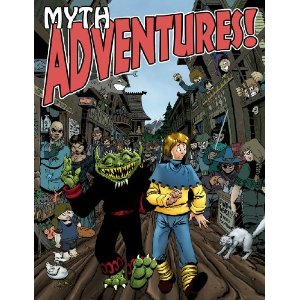
Myth Adventures, Phil Foglio’s comic-book adaptation of Robert Asprin’s fantasy/comedy novel, Another Fine Myth, is being serialized as a free webcomic [Edit: no longer available.], in the same format as Girl Genius. I remember spending a lot of effort tracking down the mid-1980s books on eBay, before they finally reissued the collection.

The title of that first novel was originally going to be Another Fine Mess, from the Laurel and Hardy catch-phrase, but someone misheard it and Robert Asprin decided he liked that version better. It turns out that “Another fine mess” is actually a misquote itself, according to this the New York Times article on why we misquote movies (via @johannadc). It was originally “Here’s another nice mess you’ve gotten me into.”

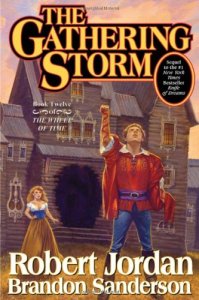
Wheel of Time: The Gathering StormThis weekend I finished reading the new Wheel of Time novel, The Gathering Storm. Now that I’ve read it, I can definitely say that Brandon Sanderson was a good choice to finish the series from Robert Jordan’s notes, and that splitting the final book into three was the right approach. It may be a doorstopper, but it would be difficult to cut more than a tiny amount without diminishing the impact of what remained.

Read more…

»All pages site-wide with this tag