I had an interesting thought looking at the Blog Action Day, um, blog, which remarked on what, for me, was Sunday:

And so we come to it at last… Blog Action Day has now officially begun for the first countries closest to the International Dateline.

I realized that it wasn’t going to stop after 24 hours the way that, for instance, Slashdot’s April Fools days run (GMT midnight to midnight). The event was designed to be October 15—not October 15 in a particular time zone. If you start with the first zone to reach a date, and run through the last zone to finish it, “October 15” would last about 48 hours.

I’m too sleepy to do the math myself, so I’ll trust Wikipedia’s entry on Time Zones:

Because the earliest and latest time zones are 26 hours apart, any given calendar date exists at some point on the globe for 50 hours. For example, April 11 begins in time zone UTC+14 at 10:00 UTC April 10, and ends in time zone UTC-12 at 12:00 UTC April 12.

So there you have it: a worldwide event tied to a calendar day but no time zone lasts 50 hours.

And here you thought things moved faster on Internet Time!
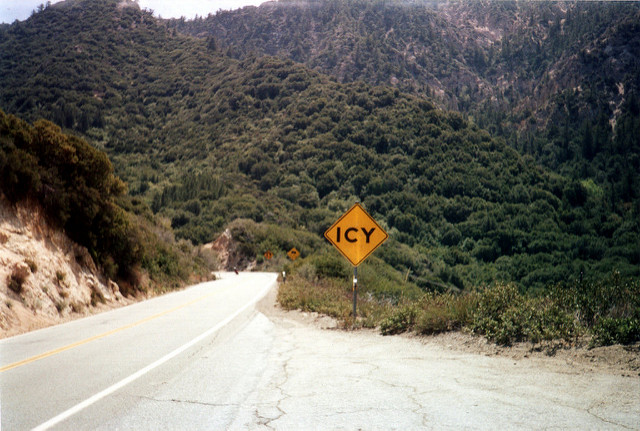
Warning sign by road: Icy.  Everything’s green.

I rediscovered this photo while looking for the UCI Student Center pic. One of us took it on the way back from a camping trip with UCI’s Campuswide Honors Program in the Angeles National Forest in April 2000. IIRC it was along Angeles Crest Highway.

A permanent sign isn’t necessarily the best way to indicate a transitory condition.

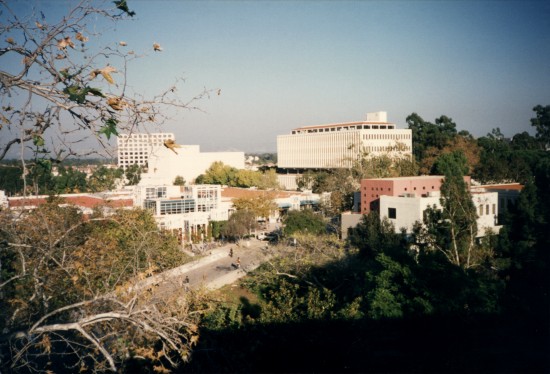
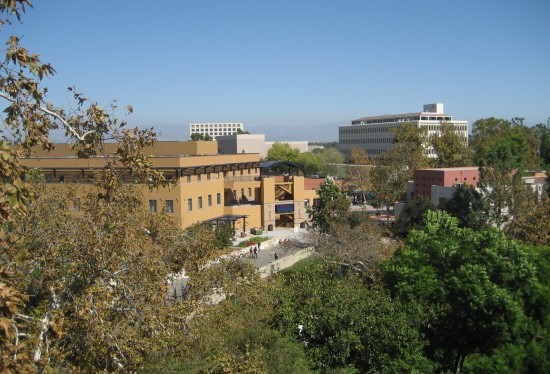
I drove out to UCI on my lunch hour, and got my first view of the newly-completed Student Center. There are actually some parts of the building left over from the previous one, but the whole exterior is new. Then I remembered a photo I’d taken of the old Student Center, back when I was attending the school, from the top of what was then the Humanites Office Building, now Murray Krieger Hall. Since I had extra time on parking, I decided to see if I could match the shot.

Here it is 10 years ago:

UC Irvine Student Center ca. 1997
UCI Student Center: Late afternoon, 1996–1997

And here it is today:

UC Irvine Student Center, 2007
UCI Student Center: Early afternoon, October 4, 2007

Continue reading

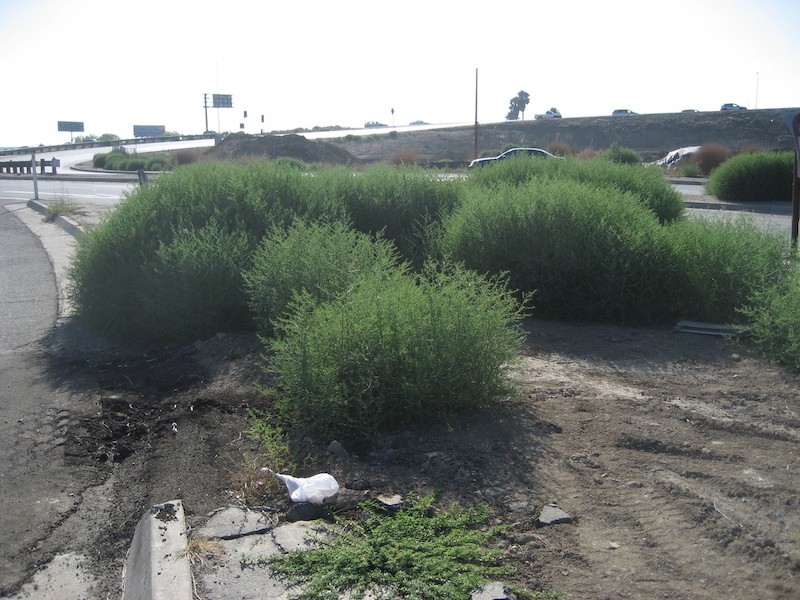
Tumbleweeds tend to collect along roadsides and fences in Orange County, dropping their seeds for the next year. This can lead to some spectacular clusters of car-sized puffballs of plant.

6 or more large, green tumbleweeds by the side of a freeway ramp.
SR-55 off-ramp at Edinger

In a few weeks*, these will dry out, turn brown, and get picked up by the Santa Ana winds. They’ll roll along the road until they hit a fence, or perhaps fetch up against another cluster, and the cycle will start all over again.

* Or possibly already — I took this photo about 3 weeks ago, and with this past week’s heat wave, I wouldn’t be surprised at all.

In early August, we went up to Santa Monica to visit my brother and his colleagues as they returned to Florida from Wikimania 2007 in Taipei… with a 10-hour layover at LAX.

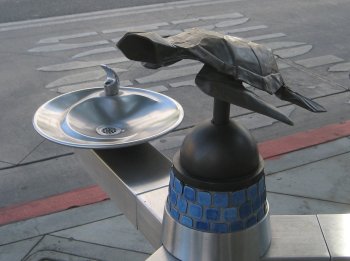
We carpooled with my parents, and arrived while the group was still stuck in customs. So we wandered around the Santa Monica Promenade and pier for a bit. Not surprisingly, there were some strange things about, like this turtle-themed drinking fountain.

Turtle and drinking fountain

Then there was this sign, on the Johannes van Tilburg Building, which I couldn’t quite decide how to take. “Free Will?” “Free Willy?”

Frey Wille

The most disturbing was probably this mash-up of two movies on one of the many theaters on the promenade:

Marquee: Knocked Up, Bratz

Is the American public ready for that film?

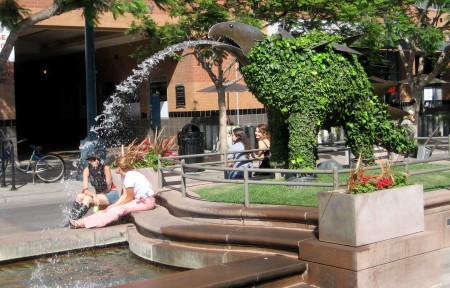
There are topiaries sculpted into the forms of dinosaurs scattered along the promenade. This stegosaurus came out the best:

Stegosaurus topiary

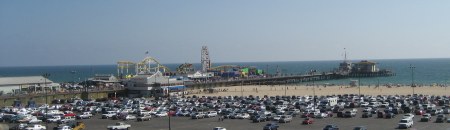
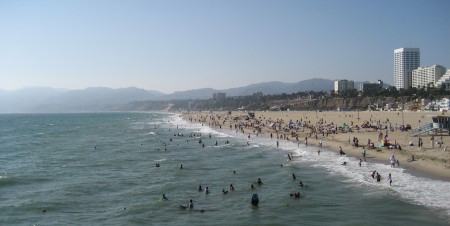
As I mentioned, we did wander out to the Santa Monica Pier after a bit. Nothing terribly odd, just a couple of photos to set the scene:

The pier viewed from the cliffs

Santa Monica beach and cliffs, seen from the end of the pier

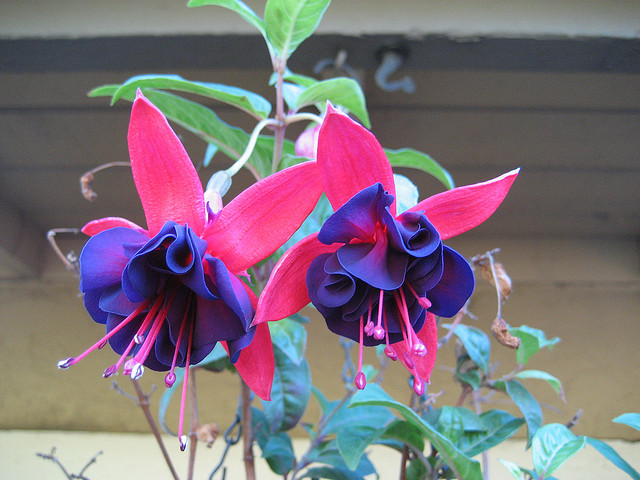
Last summer we bought a fuchsia to hang above our balcony. It bloomed for months, then seemed to die over the winter. Living in southern California, the idea of a plant that actually goes dormant in winter is a bit of a foreign concept, but we figured, well, just in case, let’s keep watering it.

It started to grow new leaves in spring, and the first hints of new buds appeared as summer arrived. It finally started blooming in earnest in mid-July, when I took this photo:

Fuchsia flowers (closeup)

Update: I’ve posted a larger version of the photo on Flickr.

»All pages site-wide with this tag