*sigh* I’m mostly happy with my G1, but I just read about the upcoming Samsung Memoir, which is the first phone I’ve seen that really takes the approach I’ve been looking for in terms of photo capability: instead of a phone that’s also a camera, it’s a camera that’s also a phone. Even the press release describes it as “designed to look and feel like a customer’s current point-and-shoot digital camera.”
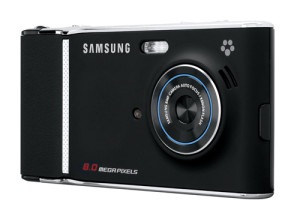
Memoir cameraphone

Key specs:

  • 8 Megapixel camera
  • Flash
  • 16x Digital Zoom
  • Touch screen
  • 5 shooting modes
  • 3G connection
  • Connects to Flickr and other photo sharing sites
  • GPS navigation

It quotes Samsung’s Bill Ogle as saying, “This is the camera phone that will make people want to leave their digital camera at home” — which is exactly what I want from a camera phone.  It’s what I’ve wanted in a camera phone for years, and now that I finally bought a new phone, now someone’s actually selling one.

On top of that, it’s being offered by T-Mobile, so I’d be able to get it at an upgrade price — or could have if I hadn’t just upgraded to a G1 three months ago!

Of course, the press release leaves out a couple of critical items:

  • No mention of optical zoom
  • No mention of mobile web browsing capabilities
  • No mention of extensibility
  • No specs on how much memory it has, or what kind of card it takes (probably the usual micro-SD)
  • No Wifi

I’ve come to really appreciate the G1’s fully-capable web browser and the Android market for third-party apps, and I’d be reluctant to give that up. If the Memoir is a camera first and a phone second, the G1 is a handheld computer first. As for zoom, I have yet to see a digital zoom that was any better than just cropping an image in Photoshop.  And even with a 3G network, I’ve found it does take time to upload the G1’s 2-megapixel images. For 8 megapixels, I’d really want wi-fi.

Ah, well.  With phones, as with many things, you have to take the plunge sometime, or you’ll keep waiting for the next model, and the next, and the next, never actually make any change at all.

We’ve been getting more spam phone calls than usual the last couple of days, to the point where cursing out the recorded messages is actually getting a little boring. So it was almost a relief to pick up today and hear, “Hello, this is the Yellow Pages calling to update your free listing.” To me, Yellow Pages = White Pages, and we did indeed move last year, so this sounded quite normal and permissible. The caller went on. “We show the name of the business as Kelson Vibber, at [right number, wrong city and zip]. Is that correct, ma’am?”

Even though she pronounced “Vibber” correctly, I immediately had warning bells. Business? Since when did we become a business? And where did they get the address? It’s not like we use it for selling anything except eBay items, and we use the right address for that. “It’s…not…[wrong city],” I said, trying to decide what to do. I don’t recall whether she asked what it was, but I know what I said next. “I can’t give you the corrected information. The person who can isn’t in right now.”

“Well, when will that be possible, because we need it by 5 pm today.”

I didn’t think of it then, but there was a good reason my hackles went even further up at that: classic phish/scam technique of creating artificial pressure to give out data. Why the hell would a legit business wait until the last minute to try to get this info? “He won’t be available before then.”

“Well, I’ll try to call back, but you might not get your listing.”

Seeing as I couldn’t find a listing for us in any likely category of either the AT&T Yellow Pages or their local “companion” directory, and we’re not even in the online white pages under any address, this doesn’t seem like a very substantial threat. Listing us with an incorrect address isn’t going to make much difference to anyone. Not to mention the part where, hello, we’re not a business.

The good: the caller didn’t announce that the call might be recorded, and in any case I don’t recall answering “yes” to anything. Also, if they call back, I’m going to ask what we’re supposedly listed under, just to see if they say “auto insurance” or something bogus like that. The bad: actual businesses might fall for a scam worded like this. And if it’s a scam, who’s to say they weren’t recording the call anyway? I’m very glad I didn’t actually say any of the real address. The ugly: “Yellow Pages” and the walking-finger logo have apparently never been copyrighted, so there’s no way to hang scammers using that tactic. And people have reported being scammed by the Online Yellow Pages and receiving bogus bills for services they never asked for, subsequent to calls very much like this.

Moral of the story: beware of anonymous callers who can pronounce “Vibber.” (OTOH, if someone reading this is from the Yellow Pages and can verify that this is indeed your general and customary business practice, by all means let us know. And then point someone in management here, so they can see that their customers think their practices suck.)

The Top 10 Reasons I Will Not Follow You in Return on Twitter is making its way around…well…Twitter today. Just reading the tile makes me wonder: why would someone expect to be followed in return? I guess it comes down to this question: What does it mean to follow someone? Is it different from friending them? And just what does “friend” mean in this context, anyway?

The way social networking sites use the term “Friend” has always bugged me. The actual software for Facebook, MySpace, or LiveJournal seems to use it to mean two distinct things:

  • An actual friend, someone with whom you interact on a personal basis.
  • An entity whose posts you’re following because you’re interested in the content, rather than invested in the person.

Wishful thinking aside, reading Neil Gaiman’s blog regularly doesn’t make me his friend.

Okay, so “Friend” is shorthand, but it brings in a load of connotations, blending the two meanings. People will freak out when a stranger “friends” them, will feel insulted if someone that they’ve friended doesn’t friend them back, or will feel rejected if someone de-friends them. I’ve heard it suggested that one reason people move from one social network to another is to start over with a clean slate of friends, and not have to worry about the drama of removing anyone from their current friends’ list.

Twitter, with the simple and direct term, “Follower,”, doesn’t seem like it would bring in the same level of baggage. To me, clicking “Follow” doesn’t feel like it has the same emotional weight as marking someone as a friend. I follow accounts that I find interesting, and that I actually have a chance of keeping up with. If someone follows me, I don’t feel obligated to follow them, and if I follow someone else, I don’t expect them to follow me.

So I was perplexed when I started seeing new followers showing up on my personal Twitter account who clearly had only done a keyword search on my latest tweet, or looked at who I was following. What were they expecting? That I would look at the “XYZ is following you!” email and trace it to their website? That I would follow them back?

It didn’t make any sense to me.

Of course, now I’m sure they were expecting me to follow them back. As this article suggests, a lot of people do see “Follow” as a synonym for “Friend”, and they were most likely trying to game that system.

In other words, despite the terminology, Twitter’s stuck with the same old baggage that clogs up other social networks.

»All pages site-wide with this tag