A while back I remarked that the Babylon 5 spinoff Crusade died in part because the Sci-Fi channel had already committed to Farscape.

I was thinking about VR.5 recently. Had it survived into a second or third season, Anthony Stewart Head might not have been available for Buffy the Vampire Slayer. Can you imagine anyone else as Giles? Of course, given the nature of the show (they killed off a regular about five episodes in, and pulled an “everything you know is wrong” moment near the end of the season), it’s entirely possible that Oliver wouldn’t have made it through season 2 anyway, and he still would have gotten the role as Giles.

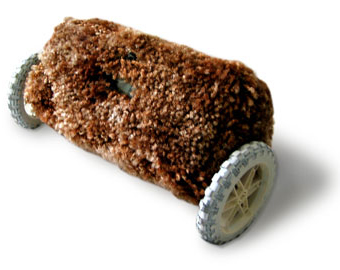
Just what I always needed! Proving that “you can sell anything on the Internet,” it’s Prairie Tumbleweed Farm [archive.org], purveyor of “organically grown,” “100% Y2K-compliant” tumbleweeds.

It wouldn’t be much use here in Orange County, where all you have to do is pull over to the side of the road at the right time of the year. Maybe in the off-season.

(Via the Daily Sucker. You have been warned.)

Here’s another good one:

This-message-is-not-spam. If you file a spam complaint you will be deemed liable for all costs related to the spam complaint.

I’m not sure I’ve ever seen the words “This is not spam” in a message that wasn’t spam, or at least talking about spam. It’s kind of like “Please do not discard” on an envelope. It’s a sure sign of junk mail. I mean, if it was mail you wanted, you wouldn’t be discarding it anyway, would you?

Talk about convoluted. Someone has developed a Java applet that will use one browser to install spyware on another. The applet runs in any browser using the Sun Java Runtime Environment—Firefox, Opera, Mozilla, etc.—and if it can convince you to run the installer, it will install spyware on Internet Explorer. And since you can’t remove Internet Explorer from Windows (you can hide it, but it’s always there…waiting), just using an alternative browser isn’t enough to protect you.

Of course, the obvious solution here is don’t let it install anything. That’s what the Java sandbox is for, after all: applets run in their own little world and can’t touch the rest of your system unless you let them (or they find a hole in the sandbox, which is why you need to keep Java up to date—just like everything else).

Time to emphasize the fact that while Firefox is still safer than IE, it’s not a magic bullet. There is no magic bullet. You can minimize risk, but never eliminate it.

(via SANS Internet Storm Center)

Fedora Core is following the path blazed by the Linux kernel: having started out as primarily an x86-based project (the 32-bit Intel-based processors from the 386 through the Pentium 4 and Athlon), it’s branching out. Versions 2 and 3 added support for the AMD-64 chips (basis of the Opteron and Athlon 64), and now, with the first test release of Fedora Core 4, official support for both 32-bit and 64-bit PowerPC.

There was a side project already, and most of the pieces that go into a Linux distribution have reached the point where they’re (mostly) platform-independent—all you need to do is recompile them. It takes fine-tuning, of course, and the actual hardware support takes effort. Yellow Dog Linux started out porting Red Hat to the PowerPC so it would run on Macs, and now builds a solid distribution off of Fedora Core, including a high-end server OS targeted for IBM’s PowerPC servers.

It’ll be interesting to compare upcoming versions of Yellow Dog and Fedora Core now that the latter is working on an actual PPC release.