So I’ve been getting generic comment spams on Speed Force today, the kind that look like someone took a bunch of compliments and a thesaurus and stuck them in a salad shooter.  I started reading.  I started reading this one aloud:

Thank you a lot for providing individuals with remarkably pleasant chance to discover important secrets from this web site. It is often very awesome and full of a lot of fun for me personally and my office co-workers to search the blog at a minimum 3 times in one week to find out the newest items you have got. And lastly, I am just certainly motivated concerning the splendid principles served by you. Some 1 ideas on this page are ultimately the simplest I’ve ever had.

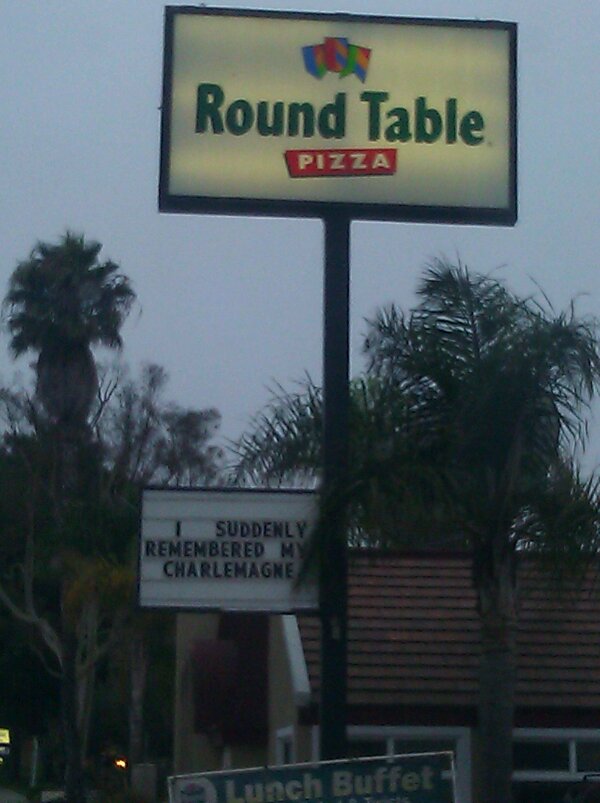
I got about halfway through, and Katie stopped me, saying, “What, you got a comment from Faz?”

Allergies to nuts, grains, vegetables, seafood and milk are common. Allergies to meat? Much less so. But that’s starting to change.

A few months ago I read about adults (author John Grisham in particular) developing an allergy to red meat after being bitten by ticks.* And not just a low-level allergy like your face turning red — we’re talking full-on hives and anaphylactic** shock, the kind of thing that requires you to carry an Epi-Pen to make sure you keep breathing long enough to reach the emergency room.

Researchers have determined that the lone star tick’s bite can cause the body to produce an IgE antibody for a sugar called alpha-gal, which is found in mammal meat.

The result: from then on, you’re allergic to meat.

CNN calls it mysterious. Allergic Living calls it baffling. It’s certainly weird compared to “usual” allergies, and the fact that the reaction is usually delayed by a few hours makes it hard to diagnose, but we’re ahead of the game in understanding it: Unlike most allergies, we know what causes this one.

With most allergies, we know the process, but we don’t know what gets the ball rolling to begin with. We know that in people who are allergic to a food, exposure to it causes an IgE antibody reaction that triggers a massive release of histamines that sends the body into some level of shock, but we don’t know why some people have that reaction and others don’t.

There are a lot of ideas being investigated, with varying amounts of supporting evidence, but there’s still nothing we can point to and say: “This caused you to be allergic to nuts” or “That caused you to be allergic to milk.” Advice to parents concerned about keeping their child from developing allergies is all over the map.

2025 Update

When I posted this back in 2012, I segued into a call for fundraising for research. The particular fundraiser has since been discontinued, but research has dramatically improved both medical understanding and practical actions around allergies.

First: it’s been clearly demonstrated that early introduction of a food lowers the risk of a child developing an allergy to it. It’s not a guarantee, but at least there’s clear advice to parents now!

Plus, immunotherapy and IgE-targeting treatments can reduce sensitivity and severity (though they can’t always eliminate reactions entirely) for those of us who already have severe allergies, those who develop allergies as adults, and the (much smaller!) percentage of children who still develop food allergies even with early exposure.

Unfortunately there’s still no clear explanation for why that ~3% of children who do have early exposure still go on to develop allergies — or why some people bitten by the lone star tick develop what is now called alpha-gal syndrome and others don’t.

Advice these days is basically: Try not to get bitten by ticks, and if you do develop the allergy, stop eating red meat.

Notes

*Naturally, this was a few days after I hiked a severely overgrown trail without taking precautions against ticks, so I freaked out a bit, but I also hadn’t found any ticks when I got home from the hike.

**Fun fact: Chrome’s spell-checker doesn’t know “anaphylactic,” and suggested such helpful alternatives as “intergalactic” and “anticlimactic.” Not sure about the former, but I get the impression a lot of viewers suffered “anticlimactic shock” when watching the Lost finale.

So, NPR ran a post by an intern who doesn’t get the whole paying-for-music thing — or, rather, realizes now that she ought to, but doesn’t want to pay for physical media of specific songs or albums.

The Trichordist responded with an open letter about the ethics of file sharing, which is a great read from the artist side of the fence, but also mixes up several issues. In particular, it misrepresents a large part of the “other side.” He starts off saying that Emily White seems to have succumbed to “false choices” presented by “Free Culture,” then goes on to present his own false choices, somehow managing to characterize rampant piracy, Creative Commons*, and the tech industry as if they’re all the same thing.

The issue is not simply “pay for everything” vs “take what you want because you can.”

Among other things it’s about recognizing that distribution channels have changed, so business models must as well. It’s about trying to come up with a system that doesn’t put unnecessary roadblocks in place. It’s about enabling those who do want to share their art in different ways to be able to do so easily.

Edit: It’s also about, and here’s where the tech industry comes in, recognizing that technology does change the legal landscape. Remember the debate over whether Google should pay up for thumbnails in image search results? (Kind of like requiring card catalogs to pay to use the title of the books they refer to.) Or Congress trying to decide whether copying a media file or program from disk to RAM constituted a legal “copy” subject to copyright restrictions?

Edit 2: And then there’s the matter of opening up the gray areas, or rather the areas that most of us intuitively see as gray, but that current copyright law treats as black and white, such as fan art and fan fiction. Technically, a six-year-old’s scrawled Mickey Mouse is illegal. Technically, software companies can tell you how many backups you’re allowed to make. Enforcement is spotty (fortunately), but that means if someone wants to get you in trouble for something else, all they have to do is report you.

If you want to make music and I want to listen to it, I’m happy to pay you for it. I have a lot of music on my iPod, and yes, I’ve paid for it. My last MP3 purchase was a week ago. Heck, I’ve bought music from Jonathan Coulton, who gives it away for free (under a Creative Commons licence, I might add).

So yeah, I’m willing to pay for music. But I don’t want to have to pay separately to listen to the same music on my home sound system, on my computer, on my phone, and in my car because your publisher has decided to put DRM in place that makes it difficult for me to move that music around. If you live on the other side of the planet from me, I want to be able to give you money directly and download the song over the internet instead of having to wait for publisher A to make a deal with publisher B and ship physical media around.

Technology has presented us with new ways of distributing art. Something like Pandora or Spotify would have been impossible before broadband internet. So let’s find ways to make it work for everyone instead of characterizing everything that isn’t pay-per-song as no better than looting.

It doesn’t help to complain about one set of false choices and then present your own.

*He cites the Creative Commons’ tax return to indicate the backers of the Free Culture movement, so it seems clear he looks at them as the same thing.

Opera logo and Opera Unite logoThe Opera web browser has introduced a lot of cutting-edge features* over the years, many of which have since become standard in other browsers like Firefox, Chrome, IE and Safari. But they’ve also introduced features that didn’t catch on. With Opera 12, released yesterday, they’ve taken the first step toward removing Opera Unite and Widgets.

Opera Unite was a fantastic idea to move beyond the standard client-server model that dominates most internet activity and take peer-to-peer communication to the next level. Instead of relying on central servers like Facebook or MSN or Gmail, you could run a chat room, photo gallery or other application directly from your computer.

It never really caught on. If I were to guess why, I’d say that the big reasons were security concerns (turning your computer into a server!), the rise of easy-to-use cloud services, and the increasing move toward mobile computing. It’s one thing to let friends remotely browse a photo gallery from your home desktop that you leave on all the time. It’s another to have them view that gallery data from your iPad over your sketchy and bandwidth-capped cell connection.

As for widgets, they were sort of an odd thing to begin with: not quite applets, not quite extensions, and in competition with native widgets on both Windows and Mac OS that didn’t depend on having a browser open. (Though these days, when don’t you have a browser open?) Honestly, I’m still somewhat mystified as to why Opera created them in the first place.

Opera 11 introduced an extension system, and they’ve released a reference on converting widgets to extensions.

Widgets and Unite are still present in Opera 12, but turned off by default for new installations, and will be removed from a future release “before the end of this year.”

*I still disagree on the issue of tabs, on the basis that a tabbed interface is distinct from MDI.

Community participation pyramid: the 90-9-1 Rule (Jakob Nielsen)Sometimes it seems like more people are talking about Google+ than using it, but it really depends on the community you’re looking at. Comics fans? Not well represented. (But they’re even harder to find on Pinterest.) But “Bad Astronomer” Phil Plait has a thriving following.

It seems like Speed Force’s Google+ Page is starting to attract a bit more participation, and I think that might be in part due to it passing the 100-follower mark. I vaguely recalled something about a 90-9-1 Rule for community involvement, which turned out to be pretty easy to find once I searched for it.

Basically, the rule states that:

  • 90% of community members are “lurkers” who read or observe, but don’t contribute.
  • 9% contribute occasionally (i.e. comment, “Like,” +1, share)
  • 1% contribute frequently, and account for most contributions

Continue reading

Techcitement writes: The Universal Lapdock Is Coming:

Enter the ClamBook, the first Android-compatible product by iPad keyboard-case maker ClamCase. Using a single MHL cable…the ClamBook provides an Android-laptop experience delivered by your phone.

The problem I have with this idea is that it’s essentially a second device, but one that can’t be used without the first one. If I’m going to have a second device to begin with, I think I’d rather have an actual tablet or ultra-light laptop.

Originally posted on Google+

Update (3/2019): I’ve been looking around, but I’m not sure this was ever released. All the search results I’m finding are articles based on the announcement in June 2012, and ClamCase is now a couple of iPad keyboard cases made by Incipio. The laptop dock concept is still around, but it doesn’t seem to have caught on nearly as well as tablet keyboards and convertible tablet/laptop 2-in-1 devices.