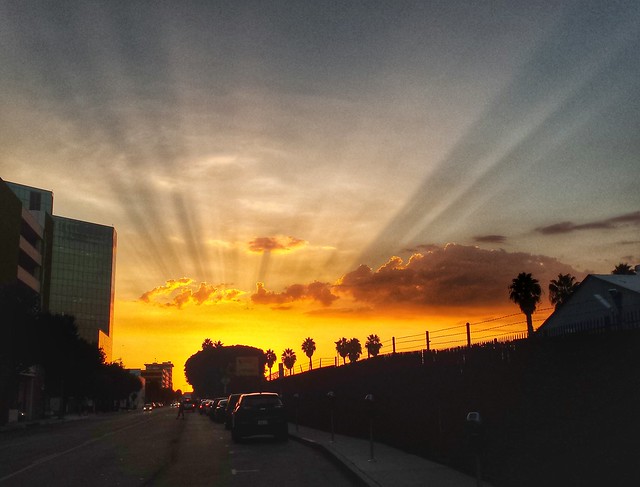
Last Tuesday I stayed late at the office. As I was leaving the parking structure, I looked to the left for oncoming cars and saw this. I was stunned. Instead of getting on the road immediately, I parked on the side of the street to look and take a couple of photos.

It didn’t look exactly like this, of course. The photo came out too yellow, so I tried adjusting it to bring out the orange tones, until finally I just started trying all of Snapseed’s filters until I hit on this one. I was surprised by the level of detail it brought out in the upper cloud layer, and how far the crepuscular rays actually extended.

I also took a photo with my camera, which was adjusted for sunset tones. It came out a lot darker than the actual scene, but the color balance is closer. Continue reading
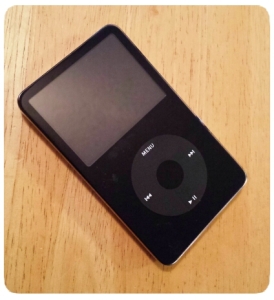
Fifth generation iPodAs I moved our iTunes library last week, I worried that the new system might not be able to sync with the old iPod, but relaxed when I saw that Apple still sold the click-wheel iPod Classic. They discontinued it a few days later, but fortunately we were able to sync the old devices.

Why do I prefer the older iPods with physical buttons and tiny screens?

Because I listen to music in the car, and a touch screen is a terrible interface for quick actions while driving.

While touch screens are better for menus, searches, finding albums, playlists, artists, and just about anything else, they’re actually dangerous for driving. A physical control of some sort is best for any action you might have to take while behind the wheel of a moving car.

Pause/Play, Skip and Volume. Those are the key things you want to be able to do with music without thinking too much about where you’re reaching, or taking your eyes off the road. (Especially if you have a mix of quiet and loud songs.) Volume’s on the dashboard, but it’s so much easier — and safer — to hit an actual button for pause/play or skip than to jab at the touch screen until you get it right.

Every time someone announces a smart watch (today it’s the Apple Watch), people trot out the idea that the wristwatch is obsolete because look, I already have a smartphone with a clock on it. But phones don’t completely replace wristwatches. They completely replace pocket watches.

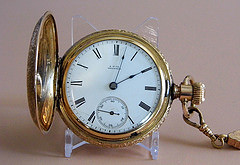
pocket watch photo
Why do I need a wristwatch? I have a clock in my pocket!
Photo by France1978 (CC)

The wristwatch thoroughly replaced the pocket watch for most of the twentieth century because it’s so much more convenient. You don’t have to pull it out of your pocket to look at it. You don’t have to worry about dropping it. You don’t even need free hands to check the time.

The only reason we went back to pocket watches is that the new ones can do so much more than the old ones did. That and so many of us are spending so much time sitting in front of a glowing rectangle with a clock in the corner. (Note to fellow geeks: not everyone does this, so don’t generalize your experience.) As with cameras, music players, and portable game systems, we abandoned a specialized device in favor of a multitasker that wasn’t quite as good at the job. The difference is that with the wrist watch, its advantage wasn’t something that newer technology could catch up on. It was the form factor.

Smartwatches, in concept, are not a step backward, even if this generation’s specs leave something to be desired (and I’m not just talking about enabling the wearer to “start and stop the flow of time”). They’re a step sideways to a different use case. It’ll take time (no pun intended) and experimentation by real-world users to shake out what it’s best suited for.

Jack the Giant Slayer isn’t a great movie by any stretch, but it’s a fun, escapist adventure that doesn’t take itself too seriously most of the time. Something that struck me as really unusual, though, is that once the story gets going, the plot never depends on major characters holding the idiot ball. There are complications galore, and there’s the dumb sidekick for the villain (think Pinky and Jafar), but generally speaking, the main characters are competent, at least in terms of their respective specialties and common sense. The complications arise not from people doing stupid things when they should know better, but from unforeseen circumstances and the scheming, strength, or skills of their opponents.

People see through poor disguises, get suspicious about the turncoat, take measures to actually protect the kingdom from invasion when they get wind of the danger, and so on.

Compare this to, for example, Prometheus, in which highly trained scientists take their helmets off on an alien planet and try to pet the unidentified creatures they find while they’re lost in an underground warren even though they have a map. Talk about too stupid to live.

I was reading at lunch today, mostly ignoring the music playing in the background, until my brain latched onto a familiar sequence of notes and started trying to place it. Wait… That couldn’t be a dance/pop version of “Popular” from “Wicked,” could it?

But I’d heard dance mixes of “Don’t Cry For Me Argentina” and the Smurfs theme, and a Techno version of “Phantom of the Opera.” So it might be…

There was too much noise to Shazam it, but a search for “Popular Wicked dance mix” found it on the first try: “Popular Song” by Mika and Ariana Grande.

Update 2025: As we all know now, Ariana Grande ended up playing Galinda in the musical’s high-profile movie adaptation. It seems kind of funny that I thought this was weird enough to blog about back then.

That was essentially my reaction to walking into the Huntington Beach Central Library a few weeks ago (though it looks really nice), and I was reminded of it when I stumbled on this line in Lev Grossman’s The Magician’s Land. (No context for you.) Now I know why Katie laughed when I showed her the picture the day after she finished the book.