
What do people think an “intensive purpose” is? “For all intents and purposes” may be redundant, but it actually makes sense.
Tag: language
Links! Alarms, Ghosts of History, Firefly Trek, WW2 Star Wars & More
Serious stuff (news, usability, history, etc.):
- Too many alarms can be as bad as none, if people learn to ignore them. Aesop knew it, but modern society keeps forgetting. (NY Times via NN Group)
- Then and now: Russian photographer Sergey Larenkov blends World War II photos with images of the same locations today. I’m a member of a Flickr group that does this with more general timeframes, Looking Into the Past, though I’ve only contributed one myself. It blends the 1997 and 2007 views of the UCI Student Center.
- The Internet Storm Center offers tips on protecting computers from lightning.
And not so serious:
- Fantastic image: Firefly crew as the Enterprise crew. Classic Star Trek, of course. One thing that really struck me was the reminder that there’s really only one woman among the regular classic Trek cast: Uhura. Nurse Chapel and Yeoman Rand are there, but neither of them would really have had the kind of focus that Kaylee, Zoe, Inara and River have here.
- Incredible custom action figure maker Sillof collaborated with Glorbes on a Star Wars in World War II series.
- The webcomic SMBC presents: The Logogeneplex! I’m pretty sure I’ve read stuff that this was used on. (Warning: archives are NSFW.)

Explicitly Tainted Tracks
 I’m listening to The Bird and the Bee right now. Every single track on the album is labeled as [Explicit] because of the song called “F——ing Boyfriend,” even though that’s the only song that actually has any explicit lyrics.
Both iTunes and Amazon have two versions of the album. One is marked explicit on every single track. The other has edited the one song, and isn’t marked.
I suppose that might have made sense in the old days when an album was only ever sold as a complete unit (with maybe a single or two)…but in today’s digital market, the base unit isn’t the album. It’s the song. If the song itself isn’t explicit, it shouldn’t be labeled as such. That would be like giving Spider-Man an R rating because Sam Raimi also directed Evil Dead.
Some consequences:
- On my playlist, 9 out of 10 songs from this album are labeled [Explicit], but aren’t. They’re perfectly suitable to play around children and people with sensitive ears, but are labeled as if they’re offensive.
- Anyone searching iTunes or Apple for an individual song will see at least two versions, one of which says it’s explicit (but isn’t) and one of which doesn’t — even though they’re the exact same recording. Confusing your customer is bad for business.
Links: Identity, Kindle, Language, and the Moon
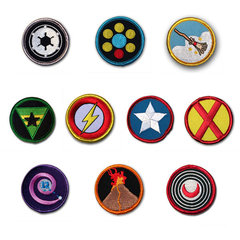 Fanboy Scouts has launched a series of Merit Badges for Geeks including achievements for Speedster, Mt. Doom, Tie Fighter Pilot, Away Team, and more.
- Privacy in terms of contextual identity. How you present yourself to your friends is not how you present yourself to your colleagues, and what you’re willing to share in each context is going to be different.
- XKCD is probably right about the future of “old-timey” speech. “Forsooth, do you grok my jive, me hearties?” We have a hard enough time getting the mid-twentieth century right, and that’s with people around who lived it!
- Darryl Cunningham debunks the Moon Hoax in comic-strip form.
- The new Kindle looks nice. They’re starting to get to the price/feature/polish point where I’d be tempted. (Well, except for that pesky DRM…) Also, Amazon launched Kindle for Android recently, but I haven’t tried it out. While it will run on Android 1.6, it’s a bit big for my G1 unless I clear out some other apps.

Links: Yen Droid Mobile Woot Quake!
I’ve always wondered how the name of Japan’s currency ended up meaning “craving” or desire in English. It turns out to be coincidence, probably from the Chinese yáhn or yin, “craving.” Word of the Day: yen.
TweetUp acquires Twidroid and changes its name to Twidroyd “to ensure minimal confusion with products from Lucas Films.” Fortunately no one will mistake Lucas Films for Lucasfilm…
Last month, KTLA reported on a 3.3 earthquake in the Inland Empire. “Dozens of residents” in the region felt it. Dozens! Wow!
I have to agree with @rzazueta: Woot’s Amazon buyout report is an instant classic (via @boingboing)
Chart of the Day presents: What people are actually doing with their cellphones (aside from talking) based on a Pew survey on mobile internet use. (via @ThisIsTrue)
Tile Will Call
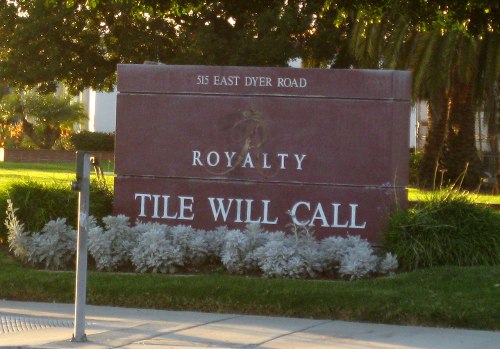
I wasn’t aware that the term “will call” was used outside the theater industry, but a quick search on the term indicates that yes, it’s used in other industries to refer to a place where buyers can pick up merchandise.
According to Wikipedia, the term’s origin is in the usage, “I will call on you,” in the sense of physically visiting someone.
What the Heck is a “Pilule?”
Spammers have been using misspellings, synonyms and malapropisms for years now. Lately I’ve been seeing a lot of Viagra/Cialis/etc. spam using the word “pilule” instead of “pill.” At first they’d just find misspellings for the drug name, but I guess some filters are blocking or scoring on “pill,” so they’ve substituted words for that…including the hilariously ironic “soft” as an abbreviation for “soft tabs.” (Comments on this post are going to give Akismet a workout, aren’t they?)
Anyway, I found it odd that so many different spams would use the same obfuscation, particularly since it looked like it was just adding letters. So I looked it up.
It turns out that pilule is a real word. According to Merriam-Webster, it entered the English language from French around 1543. Sadly, it doesn’t refer to a cute magical creature, but to a small pill — which means that (wonder of wonders) the spammers are actually using it correctly!
One question remained: was it simply an obscure word, or an archaic one? I did a search on Google Books and came up with mostly medical texts dating from the 19th century. Just about every match in the first 15 pages was either:
- An English-language medical text published between 1830 and 1930.
- French.
The few cases where I thought I’d found a more recent reference turned out to be reprints of older material.
So it looks like the word died out (in English, anyway) during the 20th century until spammers exhumed its corpse and pressed it into service.
Side Note: Twitterspam
On Friday, I posted the discovery to Twitter on @lol_spam, then retweeted it on KelsonV. Within 15 minutes, lol_spam picked up 45 new followers and KelsonV picked up 40. They were all obviously bots:
- From the time that the second post was made, each of them followed both accounts, making it obvious they were automatically following based on a keyword search.
- They all used the same scheme for the user name (first name + first 2 or 3 letters of last name + short number).
- Many of them shared name components, as if a random generator were taking a list of first names and a list of last names and mixing them together.
- None of them had posted a single tweet. I suspect that if I’d been foolish enough to follow any of them back, they would have started spamming me with links via direct message. (I caught a subtle one last week: someone had posted a series of inane tweets for the first couple of weeks, then switched to all tooth-whitening links.)
- Several profile photos appeared on more than one account.
- Many of them were following upwards of 1,000 users. (After the first few, I stopped looking at the numbers.)
- All of them claimed to be women. (A majority? That I could believe. But every single one of them?)
I will give them credit for using ordinary-looking snapshots of women with a wide variety of appearances, rather than going for the lingerie, downblouse, outright nude (the spam filters are going to be busy, aren’t they?) and other sexy (or “sexy”) poses that usually show up on these. They actually looked like photos real people might use on their profiles.
Nice try, spambots.